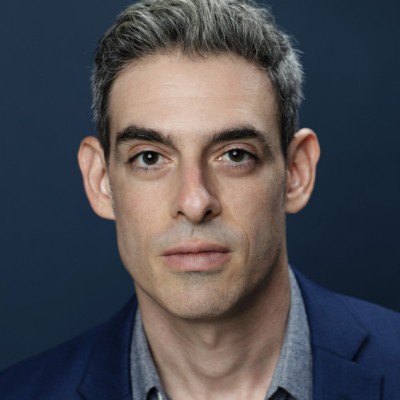
Tal Linzen
Associate Professor
New York, New York, United States



Summary
👤
Senior🎓
Top SchoolTal Linzen is an associate professor at New York University who blends behavioral experiments with computational modeling to understand how people learn language. With 15 years in linguistics and cognitive science, he has held research roles at Google and academic positions at Johns Hopkins University and NYU, illustrating a strong track record across industry and academia. His work spans probabilistic models of language comprehension and acquisition, linking parsing, learning rules, and expression choices, and he applies these insights to neural and behavioral experiments. He also contributes to the broader research software ecosystem, notably improving the documentation and usability of the MNE-python library (MEG/EEG in Python), demonstrating a commitment to reproducible, accessible science. Based in New York, Tal completed his PhD in Linguistics at NYU and holds a BSc in Mathematics and Linguistics from Tel Aviv University. He brings a rare combination of theoretical rigor, experimental savvy, and practical software communication to interdisciplinary teams.
 16 years of coding experience
 14 years of employment as a software developer
 Bachelor of Science (B.Sc.), Mathematics and Linguistics, Bachelor of Science (B.Sc.), Mathematics and Linguistics at Tel Aviv UniversityPhD, Linguistics, PhD, Linguistics at NYUMLSS
 English, Hebrew, Spanish
Stackoverflow
1reputation
0reached
0answers
0questions

Github Skills (8)
documentations10
python10
neuroimaging10
documentation10
n9
el9
ceph9
ec9
Programming languages (3)
Github contributions (5)
mne-tools/mne-python
Nov 2013 - Feb 2014
MNE: Magnetoencephalography (MEG) and Electroencephalography (EEG) in Python
Role in this project: Technical Writer
Technical WriterContributions:44 commits, 3 comments, 1 issue in 3 months
Contributions summary:Tal's contributions primarily focused on improving the documentation within the MNE-python repository. Their commits involved refining docstrings, adding code examples with the correct formatting, and clarifying procedures, especially regarding downsampled data and the use of trial IDs. These changes aimed to provide more clarity and guidance for users, enhancing the usability of the MNE-python library. The user also expanded the docstring of drop_log and refined other documentation throughout the code.
visualizationneuroimagingneurosciencepythonstatistics
TalLinzen/tallinzen.github.io
Sep 2021 - Apr 2025
Contributions:122 pushes, 1 branch in 3 years 7 months
Find and Hire Top DevelopersWe’ve analyzed the programming source code of over 60 million software developers on GitHub and scored them by 50,000 skills. Sign-up on Prog,AI to search for software developers.