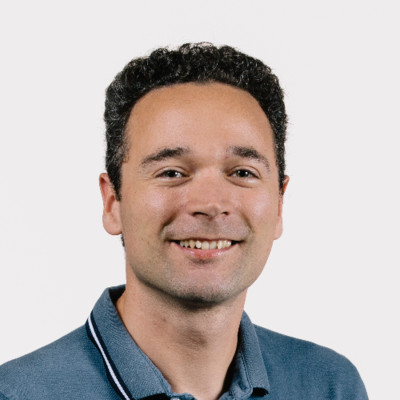
Tim Salimans
Research Scientist Team Lead at Google DeepMind
Amsterdam, North Holland, Netherlands



Summary
🤩
Rockstar🎓
Top SchoolTim Salimans is a Research Scientist Team Lead at Google DeepMind in Amsterdam with over a decade of experience advancing generative modeling, semi- and unsupervised learning, and reinforcement learning. He is widely known for seminal contributions to GANs (including the Inception score and semi-supervised GANs), early VAE reparameterization work that earned the 2014 Lindley Prize, and for practical techniques like distillation and classifier-free guidance that improve large generative models. Beyond theory, he has a strong engineering footprint — contributing to foundational tooling such as Theano (including GPU-era scalar ops), OpenAI’s improved-gan codebase, and gradient-checkpointing work that enables very large models to fit in memory. An entrepreneur and practitioner as well as a researcher, he founded Aidence (medical imaging diagnostics), ran a boutique data-science consultancy, is a multi-time Kaggle winner, and even has experience as a quantitative market maker, demonstrating rare breadth from production systems to high-stakes applied ML.
 12 years of coding experience
 6 years of employment as a software developer
 BSc (Hons), Liberal Arts and Sciences (Magna Cum Laude) Major in Mathematics & Physics, BSc (Hons), Liberal Arts and Sciences (Magna Cum Laude) Major in Mathematics & Physics at University College UtrechtPhD Econometrics, PhD Econometrics at Erasmus University RotterdamExchange Semester in Australia, Science, Exchange Semester in Australia, Science at Monash University
Github Skills (20)
scipy10
python10
dcgan10
machine-learning10
cgan10
lasagne10
tensorflow210
tensorflow10
neural-networks10
paper10
theano10
numpy9
maths9
mathics9
math9
Programming languages (4)
Github contributions (5)
openai/improved-gan
Jun 2016 - May 2018
Code for the paper "Improved Techniques for Training GANs"
Role in this project: ML Engineer
ML EngineerContributions:23 commits, 2 PRs, 5 pushes in 1 year 11 months
Contributions summary:Tim contributed to the `openai/improved-gan` repository, which focuses on improving GAN training techniques. Their commits primarily involve modifications to the `nn.py` file, suggesting they worked on core neural network components. These changes included adding, removing, and refactoring various network layers and functions. Furthermore, the user made updates to training scripts, indicating involvement in the model training process.
pytorchtechniquesimproveddeep-learninggenerative-adversarial-network
cybertronai/gradient-checkpointing
Oct 2017 - Jan 2018
Make huge neural nets fit in memory
Role in this project:ML Engineer
ML EngineerContributions:28 commits, 3 PRs, 10 pushes in 3 months
Contributions summary:Tim primarily focuses on improving the memory efficiency of gradient computation within a TensorFlow environment. Their contributions involve modifying existing code and implementing techniques for gradient checkpointing. This includes the implementation of automatic checkpoint selection strategies, modifications to the gradient computation process, and adjustments to improve test coverage and correctness. The user's work directly impacts the ability to train large neural networks within memory constraints.
memorydeep-learningnetsneural-networksfit
Find and Hire Top DevelopersWe’ve analyzed the programming source code of over 60 million software developers on GitHub and scored them by 50,000 skills. Sign-up on Prog,AI to search for software developers.