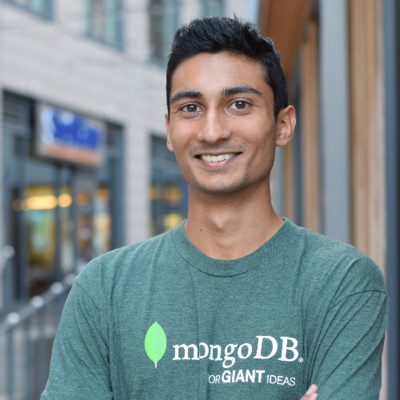
Aditya Shastri
Senior Software Engineer at Meta
New York City Metropolitan Area United States



Summary
👤
Senior🎓
Top SchoolAditya Shastri is a Senior Software Engineer in San Francisco with nine years of experience building scalable, secure backend systems at Meta and other top tech firms. He specializes in systems programming and high-performance C++ services, having designed layered I/O APIs, rewritten socket libraries for TLS, and driven sharding and concurrency efforts for WhatsApp Business Groups. His work spans cloud-native stacks (AWS S3, ECS, Fargate) and cryptography-focused private computation—he contributed to Facebook’s FBPCS secure multi-party computation codebase to enable encrypted, decoupled attribution. A Rutgers-trained mathematician-computer scientist, he combines rigorous algorithmic thinking with practical engineering, leading cross-team initiatives to meet strict SLAs. Outside of product work he’s a self-directed hacker and hackathon awardee who’s repeatedly taken 0→1 projects from design to production.
 9 years of coding experience
 6 years of employment as a software developer
 West Windsor-Plainsboro High School NorthBachelor of Science - BS Mathematics and Computer Science, Bachelor of Science - BS Mathematics and Computer Science at Rutgers University
 English, Spanish, Marathi, Hindi
Stackoverflow
13reputation
5kreached
3answers
2questions

Github Skills (13)
c-language10
aggregations10
cprogramming-language10
algorithms8
data-structures8
algorithm8
data-structure8
arraylist6
selenium6
selenium-webdriver6
python6
testng6
java6
Programming languages (7)
Github contributions (5)
facebookresearch/fbpcs
Nov 2021 - Nov 2022
FBPCS (Facebook Private Computation Solutions) leverages secure multi-party computation (MPC) to output aggregated data without making unencrypted, readable data available to the other party or any third parties. Facebook provides impression & opportunity data, and the advertiser provides conversion / outcome data.
Role in this project: Back-end Developer
Back-end DeveloperContributions:34 commits, 32 PRs in 11 months
Contributions summary:Aditya primarily focused on implementing and modifying code related to secure multi-party computation (MPC) within the Facebook Private Computation Solutions (FBPCS) repository. Their contributions include adding encryption logic for decoupled attribution, using enums and constants for attribution rules and aggregators, and exposing CLI arguments for TLS configuration within decoupled aggregation and attribution games. The user also set proper file input paths for the PCF2 stage flow and made several refactoring and bug fix commits.
multi-party-computation
adshastri/fbpcf
Jan 2022 - Nov 2022
Private computation framework library allows developers to perform randomized controlled trials, without leaking information about who participated or what action an individual took. It uses secure multiparty computation to guarantee this privacy. It is suitable for conducting A/B testing, or measuring advertising lift and learning the aggregate statistics without sharing information on the individual level.
Contributions:100 pushes, 88 branches in 9 months
controlledsharingmultiparty-computationmultipartycomputation
Find and Hire Top DevelopersWe’ve analyzed the programming source code of over 60 million software developers on GitHub and scored them by 50,000 skills. Sign-up on Prog,AI to search for software developers.