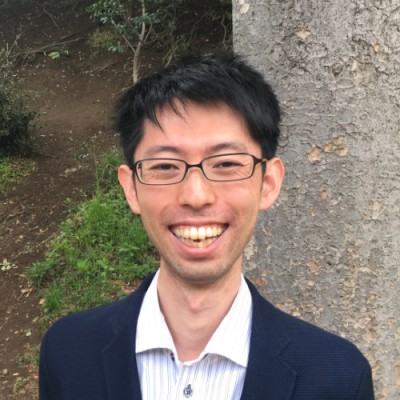
Aki Ariga
Staff Software Engineer at LayerX
Coquitlam, British Columbia, Canada



Summary
🤩
Rockstar🎓
Top SchoolAki Ariga is a Staff Software Engineer based in Coquitlam, BC with 13 years of experience building scalable ML-driven products and platforms. He has led end-to-end ML architecture and product roadmaps—designing Python/FastAPI/AWS Batch systems that supported up to a billion users and delivering 100x performance gains on legacy RFM pipelines. Comfortable across data, backend, and MLOps, he has built hosted Python execution environments, real-time ID stitching, and production recommendation engines informed by recent research. An active open-source maintainer, Aki has contributed robustness and Python 3 compatibility to widely used projects such as tabula-py, digdag, sparklyr and fastFM, combining ML engineering with CI/CD and DevOps expertise. He also cultivates technical communities (Ruby, ML) and brings a researcher’s mindset from an NLP and spoken-dialogue background—often surfacing practical fixes that improve reproducibility and real-world data quality.
 13 years of coding experience
 18 years of employment as a software developer
 Master of Engineering (M.Eng.), Electrical Engineering and Computer Science, Master of Engineering (M.Eng.), Electrical Engineering and Computer Science at Nagoya University
 Japanese, English
Stackoverflow
485reputation
73kreached
24answers
0questions

Github Skills (35)
factoring10
apache-spark10
2factor10
spark10
python10
r10
scikit10
machine-learning10
cicd10
subprocess10
factors10
dag10
dplyr10
workflow-automation10
scikit-learn10
Programming languages (19)
Github contributions (5)
chezou/tabula-py
Sep 2016 - Jan 2023
Simple wrapper of tabula-java: extract table from PDF into pandas DataFrame
Role in this project: Back-end Developer
Back-end DeveloperContributions:30 releases, 8 reviews, 332 commits in 6 years 5 months
Contributions summary:Aki primarily contributed to the core functionality of the `tabula-py` library, focusing on improving the extraction of tables from PDF files. They implemented features such as handling options for different extraction methods and incorporating support for relative column positioning. Moreover, the user refactored the code to support Python 2.7, and optimized it by integrating Java options, and by adding support for file-like objects and non-ASCII URLs. Finally, the user added code that improves the library robustness.
javapandas-dataframepdftabulapython
ibayer/fastFM
Jan 2016 - Nov 2017
fastFM: A Library for Factorization Machines
Role in this project:ML Engineer & DevOps Engineer
ML Engineer & DevOps EngineerContributions:2 reviews, 21 commits, 5 PRs in 1 year 10 months
Contributions summary:Aki primarily focused on maintaining and improving the codebase, addressing compatibility issues related to Python 3, and adding dependencies. Their contributions included refactoring code to use `list()` around `zip()` and `range()` for Python 3 compatibility and updating import paths. The user also made changes to the `setup.py` file, including adding Cython and adjusting Python version support. Moreover, they added build configurations for the CI/CD pipeline using Travis CI, showcasing DevOps skills.
factorizationmachinesfactorization-machinesmachine-learningmatrix-factorization
Find and Hire Top DevelopersWe’ve analyzed the programming source code of over 60 million software developers on GitHub and scored them by 50,000 skills. Sign-up on Prog,AI to search for software developers.