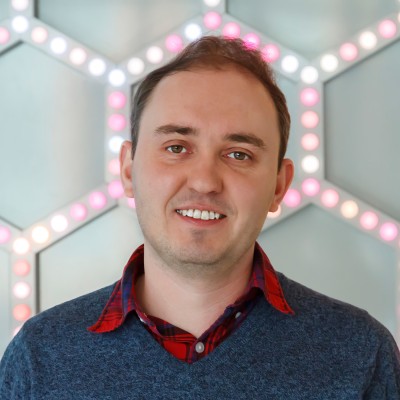
Alexander Sokolov
Associate Professor
Columbus, Ohio, United States



Summary
🤩
Rockstar🎓
Top SchoolAlexander Sokolov is an Associate Professor and theoretical chemist with 14 years of research experience developing and applying first-principles electronic structure methods for radicals, transition-metal compounds, and excited-state systems. He blends academic leadership at The Ohio State University with hands-on open-source contributions to major quantum chemistry packages like PSI4 and PySCF, where he improved gradient and ADC implementations and debugged core integral and density-matrix routines. His work spans method development (e.g., density cumulant functional theory) through practical code fixes that improved accuracy and diagnostics in widely used tools, reflecting both deep theory and software engineering skills. Trained at Saint Petersburg State University and the University of Georgia, he brings a track record of tackling challenging many-electron problems and making those advances accessible to the community via open-source collaborations.
 15 years of coding experience
 12 years of employment as a software developer
 University of GeorgiaSpecialist (M.S.), Chemistry, Specialist (M.S.), Chemistry at Saint-Petersburg State University
 English, Russian
Github Skills (8)
quantum-chemistry10
c-language10
computational-chemistry10
cprogramming-language10
numerical-methods10
python10
scientific-computing10
linear-algebra9
Programming languages (5)
Github contributions (5)
psi4/psi4
Sep 2011 - Jul 2015
Open-Source Quantum Chemistry – an electronic structure package in C++ driven by Python
Role in this project: Back-end Developer & Computational Chemist
Back-end Developer & Computational ChemistContributions:304 commits, 23 comments, 2 issues in 3 years 10 months
Contributions summary:Alexander contributed to the electronic structure package PSI4/psi4, which is written in C++ and driven by Python. The user focused on improving the derivative code for the RI-MP2 gradient contribution by implementing specific changes in the src/lib/libmints/deriv.cc file and the header file, which involved modification of the functor classes. Also included small changes in the test cases, which involved editing Python. The user addressed specific bugs by correcting the factor of 4.0 and adding extra output for debugging purposes.
cpppythonquantum-chemistryc-plus-pluscomputational-chemistry
pyscf/pyscf
Dec 2014 - Sep 2022
Python module for quantum chemistry
Role in this project:Back-end Developer
Back-end DeveloperContributions:4 reviews, 131 commits, 23 PRs in 7 years 9 months
Contributions summary:Alexander contributed to the development of the PySCF quantum chemistry module, specifically focusing on the implementation and debugging of the algebraic diagrammatic construction (ADC) methods. Their work included modifications to the integral transformation process, calculations of spectroscopic factors and the development of functions to compute 1- and 2-particle density matrices. The user's commits also involved fixing bugs and improving the accuracy of the energy calculations within the ADC framework.
python-modulesquantum-chemistry
Find and Hire Top DevelopersWe’ve analyzed the programming source code of over 60 million software developers on GitHub and scored them by 50,000 skills. Sign-up on Prog,AI to search for software developers.