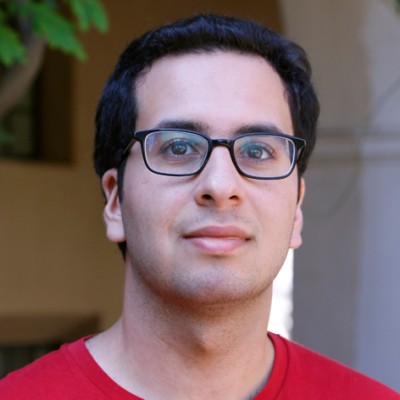
Ali Ramadhan
Computing Scientist & Founding Engineer at atdepth
Albuquerque, New Mexico, United States



Summary
🤩
Rockstar🎓
Top SchoolAli Ramadhan is a Computing Scientist and Founding Engineer with a decade of experience building GPU-accelerated ocean modeling and scientific ML systems to tackle climate and operational challenges. Currently at atdepth, he’s engineering the modeling and verification infrastructure for ocean-based carbon removal, drawing on prior applied ML work at Afresh to deploy probabilistic forecasting and inventory optimization in production. His MIT PhD work produced Oceananigans.jl, a widely used GPU-ready Julia ocean model, and he has a track record of optimizing core simulation kernels, Lagrangian particle tracking, and GPU-accelerated Bayesian inference for geophysical turbulence. Trained as a physicist, he combines lab-honed experimental skills with high-performance computing expertise, making him comfortable bridging theory, code, and deployed systems. Based in Albuquerque, he blends open-source impact with product-focused engineering to turn complex geoscience into auditable, production-ready tools.
 10 years of coding experience
 11 years of employment as a software developer
 Doctor of Philosophy - PhD Computational Earth Atmospheric and Planetary Sciences, Doctor of Philosophy - PhD Computational Earth Atmospheric and Planetary Sciences at Massachusetts Institute of TechnologyMaster of Science Physics, Master of Science Physics at University of Waterloo
 Japanese, Arabic, English
Stackoverflow
1reputation
0reached
0answers
0questions

Github Skills (17)
algorithm10
code-optimization10
algorithms10
gpgpu10
parallel-computing10
gpu10
optimisation10
accelerated-computing10
cuda10
numerical-optimization10
computational-fluid-dynamics10
fluid-dynamics10
julia10
optimization10
computational-science9
Programming languages (15)
Github contributions (5)
CliMA/Oceananigans.jl
Oct 2018 - Dec 2022
🌊 Julia software for fast, friendly, flexible, ocean-flavored fluid dynamics on CPUs and GPUs
Role in this project: Backend Developer
Backend DeveloperContributions:12 releases, 498 reviews, 4465 commits in 4 years 2 months
Contributions summary:Ali is primarily focused on implementing and optimizing the core components of the Oceananigans.jl library, particularly those related to fluid dynamics simulations. Their contributions involve benchmarking equation of state, developing Lagrangian particle tracking on GPU, and enhancing the performance of core functions by, for example, using parallel processing via the addition of multi-threading support. They are also updating and improving existing codebase, including a new benchmarking framework and improving the function for grid halo filling.
fluid-dynamicsjuliaclimateoceangpu
ali-ramadhan/matplotloom
Apr 2024 - Apr 2026
Weave your frames into matplotlib animations
Contributions:10 releases, 8 reviews, 37 PRs in 2 years
matplotlib-animation
Find and Hire Top DevelopersWe’ve analyzed the programming source code of over 60 million software developers on GitHub and scored them by 50,000 skills. Sign-up on Prog,AI to search for software developers.