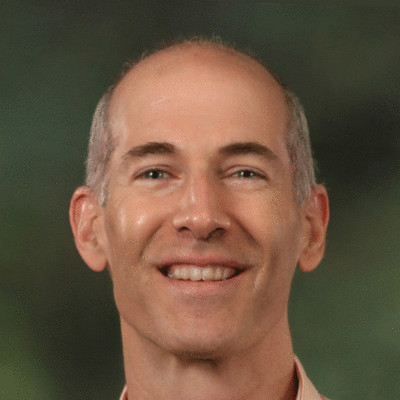
Allen Downey
Principal Data Scientist
Needham, Massachusetts, United States



Summary
🤩
Rockstar🎓
Top SchoolAllen Downey is a Principal Data Scientist at PyMC Labs and professor emeritus whose 13-year professional span builds on decades of academic scholarship and open-source authorship. He applies Bayesian statistics and physical modeling to hard problems, translating probabilistic thinking into practical Python libraries and textbooks used worldwide (Think Python, Think Bayes, Think Stats). His work bridges research and pedagogy—designing online courses and educational code that demystify signal processing, complex systems, and statistical modeling. Active across numerous repositories, he contributes core implementations for DSP, complexity, operating systems, and Bayesian tutorials, often improving examples and teaching materials rather than just APIs. Based in Needham, MA, he pairs rigorous PhD-level computer science training with a gift for clear explanations, turning subtle statistical ideas into accessible code and curricula. An unexpected strength is his long-running focus on engineering education—he consistently refactors and documents teaching repositories to make advanced topics approachable for learners and practitioners.
 14 years of coding experience
 24 years of employment as a software developer
 Ph.D, Computer Science, Ph.D, Computer Science at University of California, BerkeleyMassachusetts Institute of Technology
Stackoverflow
144reputation
28kreached
8answers
1question

Github Skills (43)
bayesian-statistics10
algorithms10
python10
codelist10
audio-processing10
networkx10
object-oriented-programming10
c1110
data-structure10
java10
cellular-automata10
c1710
javas10
code-templates10
bayesian10
Programming languages (15)
Github contributions (5)
AllenDowney/ThinkBayes
Jul 2013 - May 2020
Code repository for Think Bayes.
Role in this project: Full-stack Developer
Full-stack DeveloperContributions:28 commits, 7 PRs, 18 pushes in 6 years 11 months
Contributions summary:Allen primarily focused on adding and updating various Python and data files within the repository. The code modifications indicate a focus on building out the structure of the project. The user also changed links to copies in one of the files.
pythonthinkmachine-learningcode-repositorybayes
AllenDowney/ThinkOS
Mar 2014 - Apr 2020
Text and supporting code for Think OS: A Brief Introduction to Operating Systems, by Allen Downey.
Role in this project:Full-stack Developer
Full-stack DeveloperContributions:63 commits, 20 PRs, 42 pushes in 6 years 2 months
Contributions summary:Allen primarily contributed to the codebase by adding and modifying files related to the project's structure, including HTML and Python files. The user implemented a Python file, `thinkplot.py`, which demonstrates code for plotting and visualization. They also added several HTML files, specifically `footer.html` and `header.html`, indicating work on the user interface or content presentation. Further commits include improvements to the HTML version.
operating-system
Find and Hire Top DevelopersWe’ve analyzed the programming source code of over 60 million software developers on GitHub and scored them by 50,000 skills. Sign-up on Prog,AI to search for software developers.