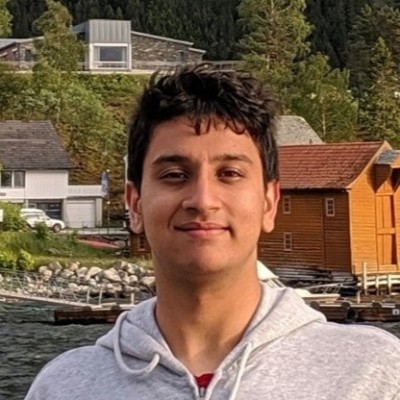
Anish Thite
Founder at Sitebrew AI
San Francisco, California, United States



Summary
🤩
Rockstar🎓
Top SchoolAnish Thite is a founder and machine learning engineer based in San Francisco with a decade of experience building research-driven ML systems and startups. He combines deep academic work—MS from Georgia Tech and published GECCO papers on AutoML and GANs—with hands-on contributions to high-profile open-source projects like EleutherAI’s GPT-Neo and the lm-evaluation-harness, extending transformer architectures and integrating evaluation datasets. His background spans practical cloud engineering at AWS (latency reduction for Lambda), edge ML and robotics work, and multiple early-stage ventures, reflecting a rare mix of production engineering and research. Known for evolving model architectures and enabling multi-GPU training pipelines, he focuses on NLP and reinforcement learning applications that bridge novel research with deployable products.
 10 years of coding experience
 5 years of employment as a software developer
 Master of Science - MS, Computer Science, Master of Science - MS, Computer Science at Georgia Institute of TechnologyHigh School Diploma, General Studies, High School Diploma, General Studies at Notre Dame High School, West Haven, CT
Github Skills (13)
attention-mechanism10
transformers10
transformer10
evaluation-framework10
gpt10
language-model10
python10
data-integration10
data-set10
datasets10
tensorflow9
machine-learning9
wikitext7
Programming languages (8)
Github contributions (5)
EleutherAI/lm-evaluation-harness
Sep 2020 - Oct 2020
A framework for few-shot evaluation of language models.
Role in this project: ML Engineer
ML EngineerContributions:1 review, 25 commits, 9 PRs in 1 month
Contributions summary:Anish primarily contributed to implementing and integrating datasets for language model evaluation. They added CoQA extraction functionalities by creating a dataset-specific processing script. Furthermore, the user integrated DROP, Wikitext2, Wikitext103, TriviaQA, StoryCloze, PiQA, and RTE datasets, demonstrating a focus on expanding the evaluation capabilities of the framework.
language-modelevaluation-frameworktransformer
EleutherAI/gpt-neo
Jul 2020 - Jul 2020
An implementation of model parallel GPT-2 and GPT-3-style models using the mesh-tensorflow library.
Role in this project:ML Engineer
ML EngineerContributions:6 commits in 3 days
Contributions summary:Anish primarily contributed to the model's architecture and functionalities. Their work included adding layer-specific attention parameters and expanding existing parameter configurations, indicating an effort to fine-tune or extend the model's capabilities. Furthermore, the user merged branch changes and fixed merge issues, implying involvement in codebase integration and maintenance. The changes were centered on the GPT-Neo model, suggesting skills in transformer-based language models.
gpttensorflowlanguage-modeltransformersgpt-2
Find and Hire Top DevelopersWe’ve analyzed the programming source code of over 60 million software developers on GitHub and scored them by 50,000 skills. Sign-up on Prog,AI to search for software developers.