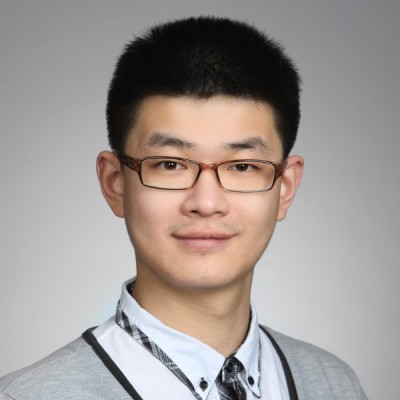
Aston Zhang
Member Of Technical Staff at OpenAI
Palo Alto, California, United States



Summary
🤩
Rockstar🎓
Top SchoolAston Zhang is an AI researcher and Member of Technical Staff at OpenAI with eight years of experience building large-scale model architectures and training systems. Previously he led long-context work on Llama at Meta Superintelligence Labs, shipping Llama 4’s 10M+ multimodal context with the iRoPE architecture, and spent six years driving AI research and management at AWS. He combines deep research rigor (PhD-level work) with practical engineering, contributing to foundational open-source projects like MXNet, Gluon-NLP, and the widely used "Dive into Deep Learning" books that power teaching at hundreds of universities. Based in Palo Alto, he focuses on scaling model capabilities for long-range and sequence modeling, with hands-on contributions to RNN/LSTM utilities and production-minded build systems. Colleagues describe him as someone who moves seamlessly between cutting-edge model design and the engineering details that make research reproducible and deployable.
 9 years of coding experience
 8 years of employment as a software developer
 Doctor of Philosophy (Ph.D.) Computer Science, Doctor of Philosophy (Ph.D.) Computer Science at University of Illinois Urbana-Champaign
Github Skills (24)
unit-testing10
python10
scripting10
mxnet10
machine-learning10
word-embeddings10
build-system10
recurrent-neural-networks10
gluon10
script10
deep-learning10
natural-language-processing10
neural-network10
sh10
nlp10
Programming languages (7)
Github contributions (5)
d2l-ai/d2l-en
Oct 2018 - Jan 2023
Interactive deep learning book with multi-framework code, math, and discussions. Adopted at 500 universities from 70 countries including Stanford, MIT, Harvard, and Cambridge.
Role in this project: Backend & DevOps Engineer
Backend & DevOps EngineerContributions:16 releases, 381 reviews, 3195 commits in 4 years 4 months
Contributions summary:Aston primarily focused on maintaining and improving the build system of the project, indicated by commits to `build/sanity_check.sh` and `build/index.html`. They addressed issues with the existing build pipeline, such as converting Jupyter notebooks to markdown files and correcting output issues. This involved changes related to integrating features and updates into the main project and managing the index page.
deep-learningmachine-learningnotebookcomputer-visionnatural-language-processing
d2l-ai/d2l-zh
Sep 2017 - Jan 2023
《动手学深度学习》:面向中文读者、能运行、可讨论。中英文版被70多个国家的500多所大学用于教学。
Role in this project:Back-end Developer & Data Scientist
Back-end Developer & Data ScientistContributions:4 releases, 62 reviews, 2390 commits in 5 years 5 months
Contributions summary:Aston's commits primarily focus on developing and refining utilities for Recurrent Neural Networks (RNNs), adding features like an LSTM flag, and integrating functionalities for predicting sequences, indicating contributions to the project's deep learning components. These changes involve the creation and modification of core Python modules for training and prediction, along with efforts to incorporate functionality for sequence processing and potentially language modeling, enhancing the project's capabilities in NLP. The user also participated in the addition of the ability to utilize the functions on different devices, enabling different levels of performance. This work reflects a combined effort to improve both model capabilities and practical implementation of deep learning models within the project.
pytorchchinesepythondeep-learningnotebook
Find and Hire Top DevelopersWe’ve analyzed the programming source code of over 60 million software developers on GitHub and scored them by 50,000 skills. Sign-up on Prog,AI to search for software developers.