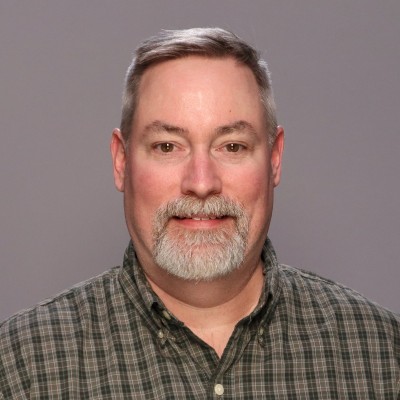
Brian Haas
Principal Computational Scientist
Cambridge, Massachusetts, United States



Summary
🤩
Rockstar🎓
Top SchoolBrian Haas is a Principal Computational Scientist with over two decades of experience building widely used bioinformatics software and driving transcriptomics research at the Broad Institute and earlier at TIGR/JCVI. He architects and implements core tools for cancer transcriptome analysis—most notably contributions to Trinity and the CTAT toolkit components like STAR-Fusion and FusionInspector—that power fusion detection, de novo assembly, and gene structure annotation for large consortia and clinical research. Equally at home in hands-on C/C++/Perl code as in grant-funded program leadership, he has led U24 and R50 projects to advance open software and resources for next-gen sequencing. His work on STAR chimeric alignment scoring and Trinity’s core algorithms reflects deep expertise in read alignment, splicing graphs, and assembly heuristics that materially improve variant and fusion discovery. A mentor and instructor who has taught workshops globally, he combines rigorous academic training (PhD-level bioinformatics) with a practical obsession for clean, reproducible analysis pipelines. Notably, his contributions span landmark projects from the human microbiome and Arabidopsis reference efforts to niche studies like axolotl limb regeneration, showing breadth across organismal and clinical genomics.
 12 years of coding experience
 11 years of employment as a software developer
 Master's degree, Biochemistry and Molecular Biology, Master's degree, Biochemistry and Molecular Biology at University at Albany, SUNYMaster's degree, Computer Science, Master's degree, Computer Science at Johns Hopkins Whiting School of EngineeringDoctor of Philosophy - PhD, Bioinformatics, Doctor of Philosophy - PhD, Bioinformatics at Boston University
Github Skills (15)
algorithm10
rna-seq10
bioinformatics10
numerical-optimization10
code-optimization10
algorithms10
c-language10
computational-biology10
cprogramming-language10
optimisation10
optimization10
data-structure9
sequence-alignment9
suffix-array9
data-structures9
Programming languages (18)
Github contributions (5)
trinityrnaseq/trinityrnaseq
Aug 2014 - Jan 2023
Trinity RNA-Seq de novo transcriptome assembly
Role in this project: Back-end Developer
Back-end DeveloperContributions:45 releases, 1600 commits, 75 PRs in 8 years 6 months
Contributions summary:Brian primarily contributed to the Trinity RNA-Seq de novo transcriptome assembly project. The commits indicate the user worked extensively on core functionality, including modifications to the Chrysalis analysis modules and adjustments to the core algorithms used. Their work involved changes related to k-mer analysis, splicing graphs, and alignment scoring, with a focus on improving the performance and accuracy of the assembly process. The user also addressed issues related to long read data and read name formatting in the output files.
rna-seq
alexdobin/STAR
Aug 2019 - Aug 2019
RNA-seq aligner
Role in this project:Back-end Developer
Back-end DeveloperContributions:25 commits, 5 PRs, 30 comments in 6 days
Contributions summary:Brian focused on enhancing the STAR RNA-seq aligner, primarily through adding comments and improving the code for chimeric read detection and scoring. They modified source files related to read alignment, suffix array functions, and chimeric detection logic, including adjustments to scoring calculations and the inclusion of additional output parameters. Their work concentrated on refining the alignment process and improving the accuracy of identifying and scoring chimeric alignments, indicating a focus on improving the core functionality of the aligner.
rna-seq
Find and Hire Top DevelopersWe’ve analyzed the programming source code of over 60 million software developers on GitHub and scored them by 50,000 skills. Sign-up on Prog,AI to search for software developers.