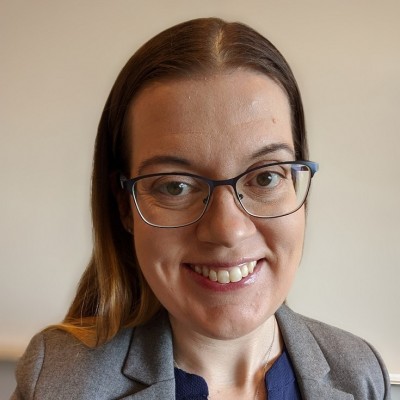
Cara Manning
Assistant Professor at University of Connecticut
Groton, Connecticut, United States



Summary
👤
Senior🎓
Top SchoolCara Manning is an Assistant Professor of Marine Sciences at UConn who leads a lab specializing in gas biogeochemistry to quantify carbon, nitrogen, and oxygen cycling in coastal, upwelling, and Arctic systems. With roughly a decade of experience and a PhD from MIT/Woods Hole, she has secured ~$2M in federal funding as PI/co-PI and established a lab that couples novel instrumentation (including an in-house gas equilibration mass spectrometer) with field campaigns from robotic kayaks to shipboard surveys. Her work combines dissolved-gas tracers, noble gases, and isotopic measurements to resolve nitrogen balances, sea–air gas fluxes, and nutrient transformations across diverse regimes such as the Benguela Upwelling System and Long Island Sound. She also builds research-to-classroom pipelines, launching high-enrollment and career-focused courses, and has a track record of translating sensor development and open-access advocacy into widely usable methods. An underappreciated strength is her knack for integrating engineering solutions with biogeochemical theory—turning bespoke instruments and novel sampling platforms into new windows on greenhouse-gas dynamics.
 10 years of coding experience
 8 years of employment as a software developer
 PhD, Chemical Oceanography, PhD, Chemical Oceanography at Woods Hole Oceanographic InstitutionPhD, Chemical Oceanography, PhD, Chemical Oceanography at Massachusetts Institute of TechnologyBSc Combined Honors, Chemistry/Earth and Ocean Sciences, BSc Combined Honors, Chemistry/Earth and Ocean Sciences at University of Victoria
Github Skills (17)
ocean4
matlab4
exchange3
toolbox3
measurements3
visualization2
measurement2
vagrant2
oceanography2
opendap2
zarr1
sar1
virtual-machine1
geospatial1
database1
Programming languages (1)
Github contributions (5)
dnicholson/gas_toolbox
Jan 2016 - Feb 2022
Contributions:1 release, 9 pushes, 3 tags in 6 years 1 month
caramanning/cambridge-bay-model
Sep 2019 - May 2020
model for methane cycling in Cambridge Bay, Nunavut
Contributions:4 releases, 2 PRs, 16 pushes in 7 months
cambridgebay
Find and Hire Top DevelopersWe’ve analyzed the programming source code of over 60 million software developers on GitHub and scored them by 50,000 skills. Sign-up on Prog,AI to search for software developers.