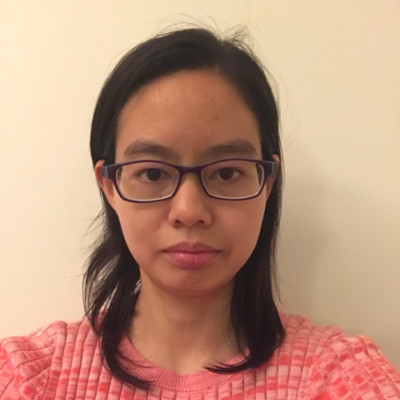
Christine Chai
Statistician
Greater Seattle Area United States



Summary
👤
Senior🎓
Top SchoolChristine Chai is a PhD-level statistician and data scientist with 11 years of experience applying text mining, survey sampling, causal inference, and machine learning to drive decisions at scale. She has built and productionized multilabel classification and experimentation models at Microsoft, and now supports applied analytics and data hygiene for private debt collection at the IRS. Her work spans both research and engineering: academic contributions in topic modeling and reproducible research, mentoring students, and practical pipeline automation that scores millions of users. An active open-source documentation contributor to flagship scientific Python projects like NumPy, SciPy, pandas, scikit-learn, and Matplotlib, she focuses on clarity and usability that helps other practitioners. Bilingual and a dual U.S.–Taiwan citizen based in Greater Seattle, she combines rigorous statistical training with hands-on software practices and a knack for translating complex methods into accessible workflows.
 11 years of coding experience
 7 years of employment as a software developer
 Doctor of Philosophy (Ph.D.) Statistical Science, Doctor of Philosophy (Ph.D.) Statistical Science at Duke UniversityMaster's Degree Electrical Engineering, Master's Degree Electrical Engineering at National Taiwan University
 Chinese, English, Spanish, Japanese
Github Skills (17)
data-visualizations10
scipy10
restructuredtext10
python10
sphinx10
matplotlib10
pandas10
rs10
data-visualisation10
numpy10
data-visualization10
documentation10
data-analysis6
data-science6
algorithms4
Programming languages (9)
Github contributions (5)
scikit-learn/scikit-learn
Jul 2022 - Nov 2022
scikit-learn: machine learning in Python
Role in this project: Technical Writer
Technical WriterContributions:4 reviews, 19 commits, 38 PRs in 4 months
Contributions summary:Christine primarily contributed to the documentation of the scikit-learn project. Their commits focused on correcting typos, improving the readability of examples and explanations, updating reference links, and moving legend locations in various example plots. The contributions enhance the clarity and user experience of the project's documentation.
data-analysispythonstatisticsdata-sciencelearn-machine-learning
numpy/numpy
Dec 2024 - Mar 2025
The fundamental package for scientific computing with Python.
Role in this project:Technical Writer / Documentation Specialist
Technical Writer / Documentation SpecialistContributions:2 reviews, 15 PRs, 2 comments in 2 months
Contributions summary:Christine's contributions primarily involved modifying and updating documentation within the NumPy repository. They focused on fixing typos, updating links to documentation resources, and improving the clarity and formatting of existing documentation files. The user also corrected a link related to Intel licenses and made the `numpy.fft` module a clickable link. Their work directly supports the usability and maintainability of NumPy's documentation.
lapackpythonmpindarrayconvolution
Find and Hire Top DevelopersWe’ve analyzed the programming source code of over 60 million software developers on GitHub and scored them by 50,000 skills. Sign-up on Prog,AI to search for software developers.