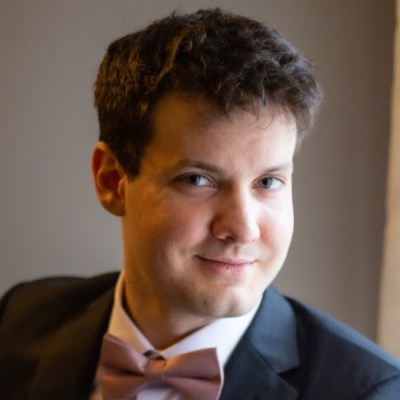
Christopher Snyder
Hematopathology Fellow
United States



Summary
👤
Senior🎓
Top SchoolChristopher Snyder is a hematopathology fellow and MD-PhD who combines frontline diagnostic expertise in bone marrow/lymph node pathology, high-parameter flow cytometry, and molecular testing with a decade-plus background in biomedical engineering and applied mathematics. He builds and validates AI and LLM-driven tools—using conformal prediction for uncertainty control—to support coding, reporting, and searchable "chat with a PDF" systems that turn complex lab data into actionable workflows. His doctoral work at UT Austin produced deep-learning models for sepsis prediction, histology segmentation, interpretable ECG classifiers, and causal generative models, yielding peer-reviewed publications and invited talks bridging ML and medicine. In residency he led utilization and quality-improvement analytics, prototype dashboards, and an internal LLM-based billing-assignment tool integrated with compliance stakeholders. He focuses on roles that marry hands-on hematopathology with safe, auditable AI deployment—especially in flow cytometry, molecular diagnostics, and digital pathology—and is open to collaborations at that interface. A lesser-known strength is his development of high-dimensional visualization tools in Kaluza to standardize lineage gating and aid manual review.
 11 years of coding experience
 Doctor of Philosophy - PhD Deep Learning / Biomedical Engineering, Doctor of Philosophy - PhD Deep Learning / Biomedical Engineering at The University of Texas at AustinBachelor of Science - BS Double Major: Biomedical Engineering and Applied Mathematics; Minor - Electrical Engineering, Bachelor of Science - BS Double Major: Biomedical Engineering and Applied Mathematics; Minor - Electrical Engineering at Washington University in St. LouisDoctor of Medicine - MD Medicine, Doctor of Medicine - MD Medicine at The University of Texas Medical Branch
Github Skills (68)
python10
deep-learning10
ml10
neural-network10
data-science10
tensorflow10
machine-learning10
pandas9
browser9
statistics9
pydata9
scikit-learn9
deep-neural-networks9
dask9
anaconda9
Programming languages (8)
Github contributions (5)
22csnyder/config
Mar 2017 - Sep 2023
This is to localize all config files in a single place that can be moved between computers
Contributions:10 PRs, 30 pushes, 1 branch in 6 years 7 months
placecomputersconfiglocalizeconfig-files
mkocaoglu/CausalGAN
May 2017 - Sep 2017
Contributions:156 commits, 1 comment in 4 months
Find and Hire Top DevelopersWe’ve analyzed the programming source code of over 60 million software developers on GitHub and scored them by 50,000 skills. Sign-up on Prog,AI to search for software developers.