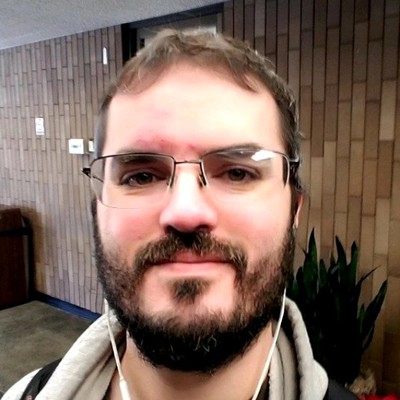
Clarence Risher
Founder at CoDwell
Northbridge, Massachusetts, United States



Summary
🤩
Rockstar🎓
Top SchoolClarence Risher is a founder and seasoned infrastructure and operations generalist with 14 years building resilient cloud systems, automation tooling, and developer workflows across companies like Amazon, Google, Cruise, and Splunk. He blends hands‑on experience with real and virtual hardware, scripting and systems programming (Python, Go, Bash, Java), and deep expertise in provisioning, CI/CD and monitoring to drive reliable production services. As founder of CoDwell he applies engineering discipline to community and co‑living projects, uniquely pairing intentional community design with makerspace and collaborative engineering goals. An active open‑source contributor, he’s improved complex asset extraction tooling in notable projects like UnityPy and refined game AI and resource systems in Screeps, showing both backend rigor and creative problem solving. Based in Northbridge, MA, he’s known for pragmatic troubleshooting, rapid learning of new platforms, and turning operational complexity into maintainable automation.
 14 years of coding experience
 8 years of employment as a software developer
 Computer Science, Computer Science at Austin Peay State UniversityUniversity of Tennessee-Knoxville
 English
Stackoverflow
7,592reputation
3.0mreached
189answers
28questions
forms
top-5%
math
top-5%
php
top-5%
canvas
top-5%
algorithm
top-5%
html
top-5%

Github Skills (27)
javascript10
gameplay10
python10
bots10
videogames10
screeps10
googlebot10
unity3d10
algorithm9
tooltip9
canvas9
math9
forms9
data-mining9
php9
Programming languages (33)
Github contributions (5)
TooAngel/screeps
Sep 2017 - Sep 2017
TooAngel NPC / bot / source code for screeps
Role in this project: Back-end Developer
Back-end DeveloperContributions:19 commits, 21 PRs, 64 comments in 7 days
Contributions summary:Clarence primarily contributed to the `screeps` project by fixing bugs, optimizing code, and adding features related to game logic. Their work involved modifying and refining core gameplay mechanics, specifically targeting resource management, creep behavior, and visual representation of game data. The commits demonstrate expertise in adjusting internal systems for efficiency and improving the player's interaction with the game. They also worked on refining the game's visual output.
crosswordgamediscordbotjavascript
K0lb3/UnityPy
Sep 2022 - Oct 2022
UnityPy is python module that makes it possible to extract/unpack and edit Unity assets
Role in this project:Back-end Developer
Back-end DeveloperContributions:7 commits, 9 PRs, 2 comments in 1 month
Contributions summary:Clarence contributed significantly to the `UnityPy` project, focusing on improving the asset extraction and processing functionality. They fixed documentation errors, updated code for compatibility with newer Python versions, and addressed issues related to the retrieval and usage of export functions. The user also added a filtering mechanism to the extractor and refactored parts of the code to enhance its robustness and efficiency, including handling edge cases related to specific Unity object types. Moreover, they improved the extraction process by correcting how data is retrieved for specific objects.
pythondata-miningassetstudiounity-assetpython-module
Find and Hire Top DevelopersWe’ve analyzed the programming source code of over 60 million software developers on GitHub and scored them by 50,000 skills. Sign-up on Prog,AI to search for software developers.