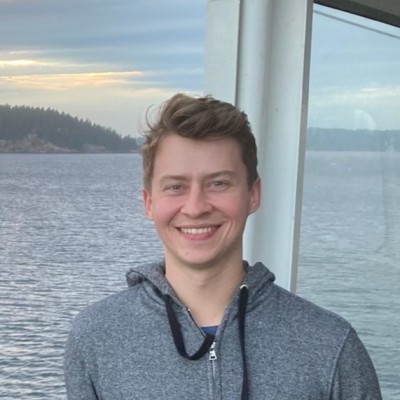
Curtis Robert
Software Engineer at Splunk
United States



Summary
🤩
Rockstar🎓
Top SchoolCurtis Robert is a software engineer with four years focused on highly available distributed data storage and production-grade observability. He has driven reliability and test-quality improvements at Splunk and contributed to prominent open-source projects like the OpenTelemetry Collector by adding memory-leak detection and stabilizing test suites. At Dell he delivered cross-team hardware-compatibility and data-protection features (one with a patent pending), cut platform support effort by 90%, and built alerting that prevented data loss. He combines hands-on debugging of core dumps and customer escalations with product-minded design and mentoring. Comfortable across backend, DevOps, and deployment tooling, he’s adept at turning flaky tests and integration issues into repeatable, production-ready workflows. Based in the U.S., he pairs systems-level rigor with a knack for pragmatic automation that improves both engineering velocity and operational safety.
 4 years of coding experience
 7 years of employment as a software developer
 Associate of Science - AS, Computer Science, Associate of Science - AS, Computer Science at Clark CollegeBachelor of Science - BS, Computer Science, Bachelor of Science - BS, Computer Science at Washington State University
Github Skills (16)
bosh10
opentelemetry10
configuration-management10
splunk10
docker10
go10
cloud-foundry10
devops10
dockers10
testing10
cicd9
kubernetes-pods9
kubernetes9
observability8
metric7
Programming languages (7)
Github contributions (5)
signalfx/splunk-otel-collector
Mar 2022 - Jan 2023
Role in this project: DevOps Engineer
DevOps EngineerContributions:768 reviews, 15 commits, 378 PRs in 9 months
Contributions summary:Curtis primarily contributed to the deployment and configuration aspects of the Splunk OpenTelemetry Collector, as evidenced by commits focused on Cloud Foundry Bosh releases. Their work included enabling the Cloud Foundry receiver and creating a Bosh release for deploying the collector to a Pivotal Cloud Foundry (PCF) environment. They also updated dependencies and configuration files to enhance functionality, including supporting multiple configuration arguments.
open-telemetry/opentelemetry-collector
Apr 2022 - Mar 2025
OpenTelemetry Collector
Role in this project:Backend & DevOps Engineer
Backend & DevOps EngineerContributions:92 reviews, 46 PRs, 115 comments in 3 years
Contributions summary:Curtis primarily focused on improving the project's test suite and ensuring code quality. Their contributions included enabling `goleak` checks across numerous packages to detect and prevent memory leaks. They addressed failing tests by adding `Shutdown` calls and ignoring leaks caused by dependencies. Additionally, they updated the project's dependencies and corrected `go.mod` and `go.sum` files after previous commits.
opentelemetry-collectortracingtempoobservabilitytelemetry
Find and Hire Top DevelopersWe’ve analyzed the programming source code of over 60 million software developers on GitHub and scored them by 50,000 skills. Sign-up on Prog,AI to search for software developers.