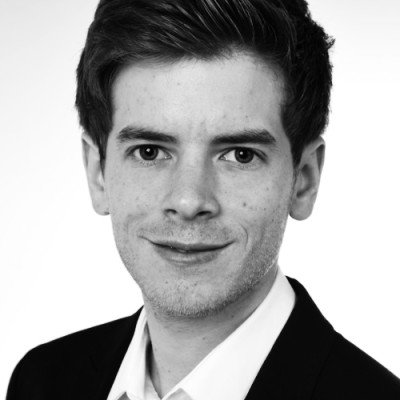
Daniel Polak
Senior Staff Scientist at Siemens Healthineers
Erlangen, Bavaria, Germany



Summary
👤
Senior🎓
Top SchoolDaniel Polak is a Senior Staff Scientist with 11 years of experience at the intersection of MR physics, AI-driven image reconstruction, and translational industry–academia collaboration. Based in Erlangen, he progressed from doctoral research at Heidelberg to applied roles and leadership at Siemens Healthineers, including visiting research stints at MIT and Harvard Medical School. He combines deep physics training with hands-on software development—contributing C implementations to the widely used BART MRI toolbox for noise estimation and sensitivity-map improvements. His work bridges algorithmic innovation (motion correction and reconstruction) with product-oriented application development, enabling clinical-grade imaging solutions. Comfortable moving between research prototypes and production code, he brings a rare mix of academic rigour and pragmatic engineering to medical imaging problems.
 12 years of coding experience
 Technischen Universität DarmstadtDoktor (Ph.D.) Physics, Doktor (Ph.D.) Physics at Heidelberg University

Github Skills (6)
c1710
mri10
c1110
numerical-methods9
algorithms9
deep-learning7
Programming languages (6)
Github contributions (5)
mrirecon/bart
Nov 2015 - Feb 2021
BART: Toolbox for Computational Magnetic Resonance Imaging
Role in this project: Back-end Developer
Contributions:1 review, 79 commits, 47 PRs in 5 years 3 months
Contributions summary:Daniel primarily focused on implementing a noise estimation command (`estvar`) and its related functions within the `bart` toolbox. This involved writing C code to simulate and analyze noise characteristics within the context of computational magnetic resonance imaging (MRI). Further contributions included the development of soft-weighting and thresholding algorithms for improving the accuracy of sensitivity maps in the reconstruction pipeline.
imagingcomputational-imagingmriiterative-methodscompressed-sensing
mikgroup/espirit-python
Nov 2016 - Oct 2022
Python ESPIRiT implementation.
Contributions:1 push, 1 issue in 5 years 11 months
python
Find and Hire Top DevelopersWe’ve analyzed the programming source code of over 60 million software developers on GitHub and scored them by 50,000 skills. Sign-up on Prog,AI to search for software developers.