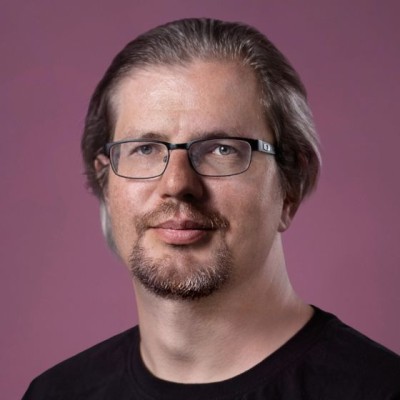
Dániel Szoboszlay
Software Engineer at evroc
Stockholm, Stockholm County, Sweden



Summary
👤
Senior🎓
Top SchoolDániel Szoboszlay is a software engineer with 14 years of experience specializing in distributed systems, consistency, and reliability, currently based in Stockholm. He has led platform-level work at Klarna—migrating a live DB from Mnesia to Aurora PostgreSQL, building transactional logical-replication streams to Kafka, and hardening CI/CD and observability for large Erlang systems. An active Erlang contributor, he has improved the OTP codebase (including FIPS-mode OpenSSL support) and enhanced the brod Kafka client’s stability, demonstrating deep protocol and crypto awareness. He enjoys digging to root causes and presenting technical learnings at conferences, blending hands-on debugging with architecture reviews and hiring. Recently he has been integrating complex payment service providers and redesigning domain models to support heterogeneous PSP capabilities. Colleagues describe him as pragmatic, detail-oriented, and skilled at turning risky migration plans into automated, testable delivery.
 14 years of coding experience
 19 years of employment as a software developer
 High-school graduation, High-school graduation at ELTE Radnóti Miklós GyakorlóiskolaMaster of Science (MSc) Information Technology, Master of Science (MSc) Information Technology at Budapest University of Technology and Economics
 English, Hungarian, Spanish
Github Skills (13)
error-handling10
webclient10
kafka10
erlang10
back-end-development10
openssl10
clientside10
cryptography10
elixir10
security9
testing9
build-automation8
git6
Programming languages (4)
Github contributions (5)
kafka4beam/brod
Dec 2015 - Apr 2021
Apache Kafka client library for Erlang/Elixir
Role in this project: Back-end Developer
Back-end DeveloperContributions:12 commits, 6 PRs, 1 push in 5 years 5 months
Contributions summary:Dániel primarily contributed to the back-end of the `brod` library. Their commits demonstrate work on core functionalities, including the consumer and producer components. They addressed issues related to timeouts, socket management, and message handling, making improvements to the library's stability and efficiency. Additionally, the user bumped the version number and refined the codebase by adhering to line length limits.
apache-kafkaerlangklarna-featuredclient-libraryelixir
erlang/otp
Apr 2014 - Oct 2021
Erlang/OTP
Role in this project:Backend Developer
Backend DeveloperContributions:1 review, 13 commits, 12 PRs in 7 years 6 months
Contributions summary:Dániel primarily focused on improving the Erlang/OTP codebase by addressing indentation issues within type specifications and record definitions. They introduced support for OpenSSL in FIPS mode, including new functions and configurations. Additionally, the user updated test suites to incorporate FIPS mode testing, ensuring all algorithms function as expected in both FIPS and non-FIPS environments, along with properly filtering supported SSL cipher suites.
gleamerlangbeamerlang-otpelixir
Find and Hire Top DevelopersWe’ve analyzed the programming source code of over 60 million software developers on GitHub and scored them by 50,000 skills. Sign-up on Prog,AI to search for software developers.