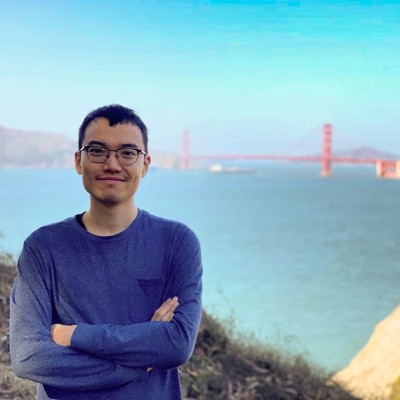
Danny Cui
Founder & CEO at Sparkoz
Denver, Colorado, United States



Summary
👤
Senior🎓
Top SchoolDanny Cui is a founder and CEO with 12 years of experience at the intersection of AI, computational neuroscience, and robotics, currently leading Sparkoz to apply AI and robotics for better public services from Denver. He previously co-founded AnKobot, building robot vision and brain systems for home robotics, and spent formative years at Numenta reverse-engineering neocortical algorithms for real-time streaming and sensorimotor inference. A PhD-trained neuroscientist from the University of Maryland, Danny bridges rigorous academic modeling with production C++ and Python implementations—his open-source contributions include core enhancements to Numenta’s HTM/NuPIC projects such as temporal memory and SDRClassifier improvements. He combines deep theory (probabilistic neural models and sensorimotor learning) with hands-on systems engineering for embedded and scalable ML, and uniquely blends startup leadership with low-level algorithmic contributions to influential neuroscience-inspired AI software.
 11 years of coding experience
 10 years of employment as a software developer
 Bachelor Physics, Bachelor Physics at University of Science and Technology of ChinaDoctor of Philosophy (PhD) Neuroscience and Cognitive Sciences, Doctor of Philosophy (PhD) Neuroscience and Cognitive Sciences at University of Maryland
Github Skills (12)
hierarchical-temporal-memory10
unit-testing10
algorithms10
c-language10
cprogramming-language10
python10
ml9
aiml9
ai9
architecture8
architectures8
tensorflow4
Programming languages (3)
Github contributions (5)
numenta/nupic-legacy
Jun 2015 - Jun 2017
Numenta Platform for Intelligent Computing is an implementation of Hierarchical Temporal Memory (HTM), a theory of intelligence based strictly on the neuroscience of the neocortex.
Role in this project: Back-end Developer & ML Engineer
Back-end Developer & ML EngineerContributions:44 commits, 16 PRs, 55 comments in 2 years
Contributions summary:Danny implemented orphan synapse decay functionality, modifying C++ code related to PyRegion and related classes to include createSpec and destroySpec methods, which are key elements for region implementation within Numenta's HTM framework. They also made multiple changes to `nupic/research/temporal_memory.py` and its related files to implement and refine temporal memory functions, including the addition of computePredictedActiveCellIndices and the incorporation of NegLL error metric for performance analysis. These updates suggest active involvement in developing and optimizing core HTM algorithms within the project.
htmmemoryneurosciencedeep-learninghierarchical
numenta/nupic.core-legacy
Jun 2014 - Jun 2017
Implementation of core NuPIC algorithms in C++ (under construction)
Role in this project:Backend Developer
Backend DeveloperContributions:7 commits, 9 PRs, 18 comments in 3 years
Contributions summary:Danny primarily contributed to the `SDRClassifier` within the `nupic.core-legacy` repository. Their work involved modifying the C++ code to enhance the classifier's functionality, particularly enabling it to handle multiple categories. This includes changes to the `SDRClassifier.cpp` file, the corresponding test file, and related bindings. The contributions involve improvements and bug fixes within the core algorithms of the NuPIC project.
nupiccpp
Find and Hire Top DevelopersWe’ve analyzed the programming source code of over 60 million software developers on GitHub and scored them by 50,000 skills. Sign-up on Prog,AI to search for software developers.