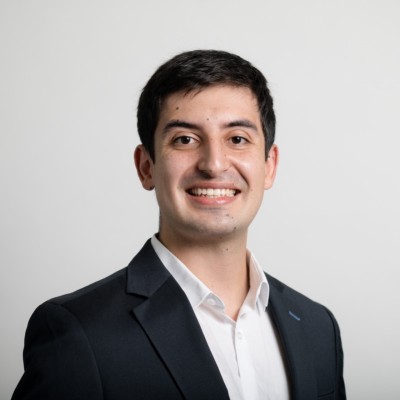
David Neira
Assistant Professor at SECQUOIA
Lafayette, Indiana, United States



Summary
🤩
Rockstar🎓
Top SchoolDavid Neira is an assistant professor of chemical engineering at Purdue and principal investigator of SECQUOIA, bringing 11 years of experience at the intersection of chemical engineering, optimization, and quantum computing. He combines academic rigor (PhD from Carnegie Mellon) with hands-on contributions to open-source optimization tools—most notably enhancements to Pyomo's MindtPy solver—demonstrating deep expertise in MINLP decomposition methods and solver engineering. His work spans NASA and USRA visiting scientist roles in quantum AI, industry internships at ExxonMobil, and teaching and research posts in Colombia and the U.S., reflecting a rare blend of practical, theoretical, and pedagogical strengths. Colleagues know him for translating algebraic modeling and computational algebraic geometry into usable solvers and for pushing quantum methods toward practical optimization use-cases.
 11 years of coding experience
 8 years of employment as a software developer
 Exchange Semester as part of the Young Engineers Scholarship from the DAAD, Ingeniería química, Exchange Semester as part of the Young Engineers Scholarship from the DAAD, Ingeniería química at Otto-von-Guericke-Universität MagdeburgDoctor of Philosophy (Ph.D.), Chemical Engineering, Doctor of Philosophy (Ph.D.), Chemical Engineering at Carnegie Mellon UniversityUniversidad de los Andes
 Spanish, German, English, French
Stackoverflow
111reputation
790reached
1answer
0questions

Github Skills (11)
linear-programming10
lang10
mathematical-programming10
python10
nonlinear-programming10
modeling10
optimization10
gurobi8
pyomo6
nonlinear-optimization6
mixed-integer-programming6
Programming languages (9)
Github contributions (5)
Pyomo/pyomo
Mar 2018 - Jul 2022
An object-oriented algebraic modeling language in Python for structured optimization problems.
Role in this project: Back-end Developer
Back-end DeveloperContributions:131 reviews, 22 commits, 6 PRs in 4 years 4 months
Contributions summary:David's primary contribution involves the implementation and modification of the MindtPy solver, an algebraic modeling language in Python for structured optimization problems. The commits demonstrate a focus on enhancing the solver's functionality and addressing potential issues within the decomposition methods, including Outer Approximation (OA) and Extended Cutting Plane (ECP). The user implemented changes related to subsolver options and incorporated functionalities such as feasibility cuts and objective linearization, while also refactoring code. Further work includes the fixing of known bugs, and adding features to improve master and subproblem termination conditions.
pythonnonlinear-programmingstructuredgurobiproblems
felicitygong/MINLPinstances
Feb 2018 - Dec 2022
Contributions:7 commits, 6 pushes in 4 years 10 months
Find and Hire Top DevelopersWe’ve analyzed the programming source code of over 60 million software developers on GitHub and scored them by 50,000 skills. Sign-up on Prog,AI to search for software developers.