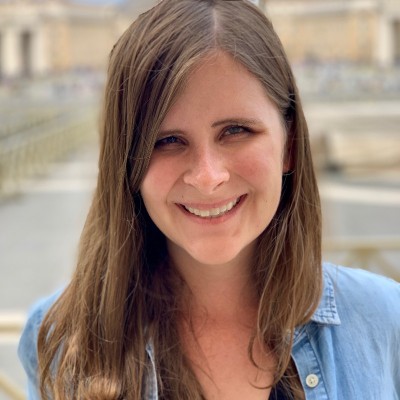
Emily Alsentzer
Assistant Professor at Stanford University
Palo Alto, California, United States


Summary
👤
Senior🎓
Top SchoolEmily Alsentzer is an Assistant Professor of Biomedical Data Science at Stanford who bridges machine learning, natural language processing, and clinical practice to make healthcare more equitable and actionable. With a decade of experience spanning a PhD from MIT/HST, postdoctoral work deploying ML at Mass General Brigham, and industry internships at Microsoft and Verily, she focuses on trustworthy models that perform well with limited labeled data and integrate heterogeneous clinical signals like EHRs and genomics. Her research emphasizes embedding biomedical knowledge from text and knowledge graphs into models so predictions can be both accurate and interpretable for clinicians. She has practical deployment experience in hospital systems and a track record of translating research into clinical workflows. Based in Palo Alto, she combines rigorous academic training with hands-on implementation, and her background includes leadership in student publishing and cross-disciplinary epidemiology projects that reveal a long-standing commitment to applied health impact.
 10 years of coding experience
 2 years of employment as a software developer
 Doctor of Philosophy - PhD, Health Science and Techonology - Medical Engineering and Medical Physics, Doctor of Philosophy - PhD, Health Science and Techonology - Medical Engineering and Medical Physics at Massachusetts Institute of TechnologyValedictorian, Distinguished Scholars Diploma, Valedictorian, Distinguished Scholars Diploma at Hume-Fogg Academic High SchoolDuring high school, I attended the School for Science and Math at Vanderbilt (SSMV) one day a week instead of my normal high school. Over the four years in the SSMV program, I was involved in a number of research projects, which ranged from sequencing the GAPDH gene of an endangered plant species to examining recolonization of algal assemblages after flooding in Nashville creeks., During high school, I attended the School for Science and Math at Vanderbilt (SSMV) one day a week instead of my normal high school. Over the four years in the SSMV program, I was involved in a number of research projects, which ranged from sequencing the GAPDH gene of an endangered plant species to examining recolonization of algal assemblages after flooding in Nashville creeks. at School for Science and Math at VanderbiltMaster of Science (M.S.), Biomedical informatics, Master of Science (M.S.), Biomedical informatics at Stanford University

Github Skills (57)
pytorch10
python10
machine-learning10
multimodal10
llm10
audio10
deep-learning10
natural-language-processing10
transformer10
speech-recognition10
nlp10
bert-embeddings10
graph-representation-learning10
machine-learning-models9
transformers9
Programming languages (6)
Github contributions (5)
EmilyAlsentzer/personal_website
Jan 2020 - Oct 2024
📝 Easily create a beautiful website using Academic, Hugo, and Netlify
Contributions:2 PRs, 92 pushes, 1 branch in 4 years 9 months
hugonetlify
EmilyAlsentzer/EmilyAlsentzer.github.io
Jan 2018 - Sep 2023
Contributions:27 pushes, 1 branch in 5 years 8 months
Find and Hire Top DevelopersWe’ve analyzed the programming source code of over 60 million software developers on GitHub and scored them by 50,000 skills. Sign-up on Prog,AI to search for software developers.