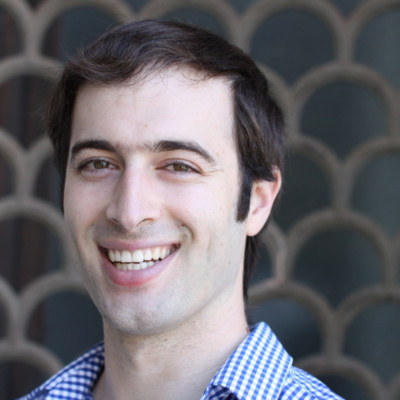
Evan Sherwin
Research Scientist at Berkeley Lab
United States



Summary
👤
Senior🎓
Top SchoolEvan Sherwin is a research scientist and data-informed energy policy analyst with a decade of experience applying remote sensing, machine learning, and techno-economic modeling to reduce methane emissions and evaluate carbon dioxide removal pathways. He combines rigorous academic training (PhD in Engineering and Public Policy, MS in Machine Learning, BA in Physics/Applied Math) with hands-on systems modeling developed at Lumina and research roles at Stanford and Berkeley Lab. Evan focuses on picking the most consequential questions—how hydrocarbon fuels fit into a decarbonizing system and where to target detection and mitigation across the oil and gas value chain—and uses the right mix of datasets and tools to answer them. Notably, his work spans granular data-driven detection (e.g., leveraging electricity and remote sensing signals) to multi-decade energy system uncertainty and policy analysis, bridging technical, economic, and policy perspectives.
 10 years of coding experience
 14 years of employment as a software developer
 BA, Physics, Applied Mathematics, BA, Physics, Applied Mathematics at University of California, BerkeleyDos Pueblos Senior High School
Github Skills (3)
climate-change7
machine-learning5
validation3
Programming languages (2)
Github contributions (5)
esherwin/MethaneDistributions
Nov 2022 - Aug 2023
Contributions:1 release, 1 PR, 4 pushes in 9 months
esherwin/MethaneDistributionsPublished
Aug 2023 - Nov 2023
Contributions:1 release, 28 pushes, 1 branch in 2 months
Find and Hire Top DevelopersWe’ve analyzed the programming source code of over 60 million software developers on GitHub and scored them by 50,000 skills. Sign-up on Prog,AI to search for software developers.