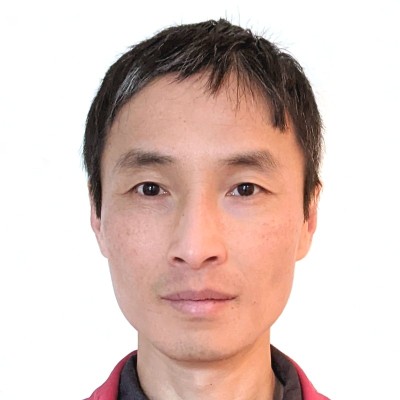
Francis Tseng
Principal Architect at NVIDIA
Portland, Oregon, United States



Summary
🤩
Rockstar🎓
Top SchoolFrancis Tseng is a Principal Architect based in Portland, Oregon with 12 years of post-academic experience and a deep foundation from a PhD in Computer Architecture. He has led chip and systems architecture across Intel, Microsoft, SAPEON, and now NVIDIA, with roles spanning Xeon Phi CPU core design to DPU and NPU system architecture. Francis blends low-level hardware design with machine learning practice—he has contributed ML engineering code and educational notebooks to the well-known ml4a project, implementing and documenting CNNs and sequence models for artists and learners. Known for moving between research-grade rigor and production-focused engineering, he often refactors complex codebases into clearer, reusable guides and tooling. Colleagues rely on him to bridge silicon, firmware, and ML software stacks to turn research ideas into deployable systems.
 12 years of coding experience
 15 years of employment as a software developer
 PhD Computer Architecture, PhD Computer Architecture at The University of Texas at AustinBSE Computer Engineering, BSE Computer Engineering at University of Michigan
Github Skills (15)
neural-network10
mask-rcnn10
keras10
faster-rcnn10
machine-learning10
jupyter-notebook10
guideline10
convolutional-neural-networks10
tensorflow10
python10
user-guide10
recurrent-neural-networks8
computer-vision8
word2vec7
tsne7
Programming languages (19)
Github contributions (5)
ml4a/ml4a
Jun 2016 - Jul 2017
A python library and collection of notebooks for making art with machine learning.
Role in this project: ML Engineer
ML EngineerContributions:42 commits, 1 PR, 35 pushes in 1 year 1 month
Contributions summary:Francis primarily contributed to the development of machine learning models and related code within the repository. Their work involved implementing and training convolutional neural networks (CNNs) for image classification using Keras. Additionally, the user refactored and organized the project code, adapting guides from Markdown to iPython notebooks. The core contribution focuses on providing machine learning code and educational resources.
python-librarypythonartdata-sciencemachine-learning
ml4a/ml4a.github.io
Apr 2016 - Jul 2016
machine learning for artists
Role in this project:ML Engineer
ML EngineerContributions:10 commits, 1 PR, 5 pushes in 3 months
Contributions summary:Francis primarily contributes to developing machine-learning-related guides and tutorials within the repository. Their work focuses on implementing and explaining convolutional neural networks for image classification using the Keras library, demonstrated through the MNIST dataset example. Furthermore, they've incorporated various guides that outline the fundamentals, neural networks, and reinforcement learning, along with implementing sequence-to-sequence models. The user has also updated the layout and incorporated resources like MathJax and Highlight.js to enhance the presentation and readability of the guides.
pythondata-sciencedeep-learningmachine-learningtensorflow
Find and Hire Top DevelopersWe’ve analyzed the programming source code of over 60 million software developers on GitHub and scored them by 50,000 skills. Sign-up on Prog,AI to search for software developers.