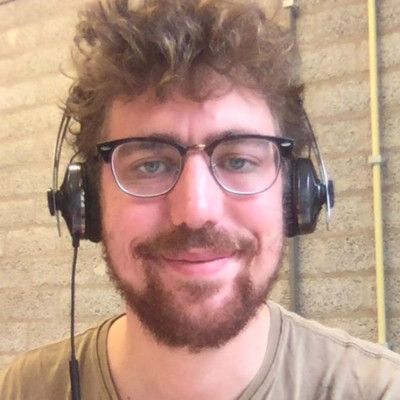
Gilles De Hollander
Research Associate
Amsterdam, North Holland, Switzerland



Summary
👤
Senior🎓
Top SchoolGilles De Hollander is a computational neuroscientist and AI specialist with 14 years of experience applying Bayesian modeling, machine learning and ultra-high field (7T) neuroimaging to study decision-making and vision. He combines deep academic credentials—a cum laude PhD in Neuroscience—with hands-on engineering, building Python analysis pipelines that handle tens of millions of voxels per volume. At the University of Zurich he runs 7T MRI projects on risk-related decisions and previously led tool development and international collaborations at VU Amsterdam and the Chinese Academy of Sciences. An active open-source contributor, he has improved flagship neuroimaging libraries such as nilearn, nipype and pycortex—adding atlas fetching, FreeSurfer/ITK support and fmriprep importers that eased real-world workflows. Comfortable across Bayesian inference (STAN, MCMC), classical ML and large-scale data engineering, he pairs rigorous statistical thinking with pragmatic software QA and tooling. Colleagues describe him as a scientist-engineer who turns complex MRI challenges into reproducible, well-tested code and reproducible analyses.
 14 years of coding experience
 3 years of employment as a software developer
 Doctor of Philosophy - PhD, Neuroscience, Cum Laude (top 5% of the Netherlands), Doctor of Philosophy - PhD, Neuroscience, Cum Laude (top 5% of the Netherlands) at University of AmsterdamMSc, Artificial Intelligence, MSc, Artificial Intelligence at Universiteit van AmsterdamVWO, N&G and N&T with Philosophy, History and Latin, VWO, N&G and N&T with Philosophy, History and Latin at Vossius Gymnasium Amsterdam
 English, German
Github Skills (18)
data-analysis10
pytest10
python10
brain-imaging10
scikit10
machine-learning10
workflow-engine10
surf10
fmi10
numpy10
neuroimaging10
surface10
scikit-learn10
mri10
dataflow9
Programming languages (6)
Github contributions (5)
nilearn/nilearn
Jul 2018 - Mar 2019
Machine learning for NeuroImaging in Python
Role in this project: Data Scientist
Data ScientistContributions:12 commits, 3 PRs, 16 comments in 8 months
Contributions summary:Gilles primarily contributed to the development of the `nilearn` library, specifically focusing on adding and improving datasets related to brain atlases. They implemented the `fetch_atlas_pauli_2017` function, allowing users to download and utilize the Pauli et al. (2017) subcortical atlas. Further contributions include adding descriptions and improving the flexibility of the atlas download function, as well as integrating the atlas into plotting examples and updating documentation.
neuroimagingpythondecodingbrain-connectivitymachine-learning
gallantlab/pycortex
Dec 2018 - Dec 2019
Pycortex is a python-based toolkit for surface visualization of fMRI data
Role in this project:Data Scientist
Data ScientistContributions:5 commits, 4 PRs, 4 comments in 1 year
Contributions summary:Gilles primarily focused on enhancing the Pycortex toolkit's ability to import data from fMRIprep, a popular preprocessing pipeline for fMRI data. They implemented a new module, `fmriprep.py`, to handle the import of anatomical and surface data generated by fMRIprep. The user also provided an example demonstrating how to integrate the fmriprep output with Pycortex. Further commits improved fmriprep integration and compatibility.
neuroimagingpythonfmritopological-data-analysissurface
Find and Hire Top DevelopersWe’ve analyzed the programming source code of over 60 million software developers on GitHub and scored them by 50,000 skills. Sign-up on Prog,AI to search for software developers.