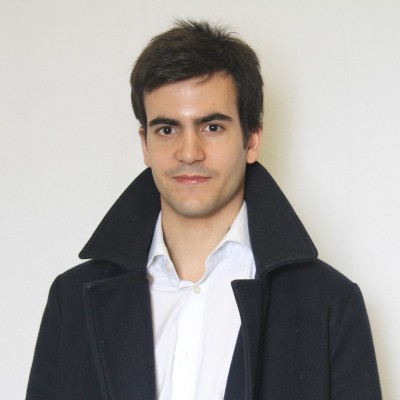
Guillaume Giudicelli
Computational Scientist
Cambridge, Massachusetts, United States



Summary
🤩
Rockstar🎓
Top SchoolGuillaume Giudicelli is a computational scientist with nine years of experience building high-fidelity reactor physics software and open-source simulation frameworks. Based at Idaho National Laboratory after a PhD at MIT, he specializes in hybrid stochastic-deterministic methods and high-performance computing for nuclear reactor analysis. He is a productive contributor to flagship projects such as MOOSE and OpenMC, where he implemented string/template readers, multi-species diffusion physics, and partial current scoring for Monte Carlo tallies. His background blends rigorous academic research, hands-on code optimization, and practical engineering from industry internships and a brief military leadership role. Comfortable operating across backend code, numerical methods, and cluster-scale execution, he focuses on turning complex physics into reliable, reusable software components. An interesting non-obvious strength is his track record of improving input parameter design and refactoring legacy modules to make advanced physics more maintainable and extensible.
 9 years of coding experience
 1 year of employment as a software developer
 Doctor of Philosophy (Ph.D.), Nuclear Engineering, Doctor of Philosophy (Ph.D.), Nuclear Engineering at Massachusetts Institute of TechnologyDiplome d'Ingénieur, 21st century Energies, Diplome d'Ingénieur, 21st century Energies at Ecole polytechniqueEngineer's Degree, Nuclear Engineering, Engineer's Degree, Nuclear Engineering at MINES ParisTech
 English, Chinese, German, French
Github Skills (12)
fortran10
computational-physics10
c-language10
cprogramming-language10
numerical-methods10
template-metaprogramming9
software-design7
testing7
mesh7
automatic-differentiation7
data-structures6
data-structure6
Programming languages (12)
Github contributions (5)
idaholab/moose
Nov 2020 - Jan 2023
Multiphysics Object Oriented Simulation Environment
Role in this project: Back-end Developer
Back-end DeveloperContributions:6694 reviews, 1094 commits, 1265 PRs in 2 years 3 months
Contributions summary:Guillaume implemented the feature to read string data within the framework, adding support for a template file reader utility. They also added a new component to handle a physics definition, and made improvements to the multi-species diffusion physics, including support for the dynamic pressure and code optimizations. Additionally, they addressed several issues related to the automatic generation of the data used in the model and refactored the input parameters for improved design.
pythonfinite-element-analysisfemparallelmultiphysics
openmc-dev/openmc
May 2017 - Oct 2020
OpenMC Monte Carlo Code
Role in this project:Back-end Developer
Back-end DeveloperContributions:6 reviews, 126 commits, 20 PRs in 3 years 5 months
Contributions summary:Guillaume primarily contributed to the OpenMC Monte Carlo Code, a computational physics repository. Their work focused on numerical calculations and implementing or adjusting code related to tallies and scoring of different physical quantities such as flux and currents. Furthermore, the user modified the source files related to filtering and geometry with specific changes to handle surface-crossing and create a partial current scoring capability. The user also added documentation for the new functionalities and created an example of a depletion calculation and another of a restart.
computational-physicsnuclear-energyopenmcnuclear-fusionnuclear-engineering
Find and Hire Top DevelopersWe’ve analyzed the programming source code of over 60 million software developers on GitHub and scored them by 50,000 skills. Sign-up on Prog,AI to search for software developers.