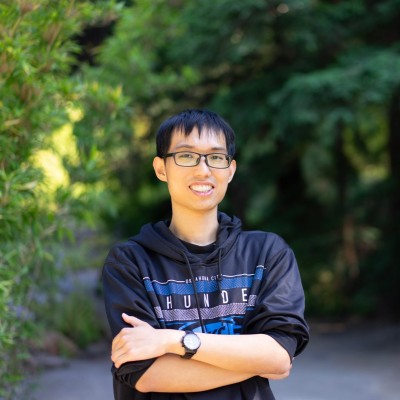
Haotian Tang
Research Scientist at Meta
Mountain View, California, United States



Summary
🤩
Rockstar🎓
Top SchoolHaotian Tang is a research scientist with ~8 years of experience building efficient 3D deep learning systems and multi-modal foundation models, currently on Meta’s TBD Lab in Mountain View. He completed a PhD at MIT EECS under Prof. Song Han, producing widely used projects like TorchSparse, PVCNN, SPVNAS and BEVFusion that emphasize performance and deployability across GPU/CPU and hardware. His work blends systems engineering and modeling—implementing CPU fallbacks, generalized sparse convolutions, FLOPs analysis and distributed training support—so research artifacts are production-ready. Before Meta he helped launch large-scale pretraining infrastructure at Google DeepMind and developed high-throughput visual generation at NVIDIA, demonstrating an uncommon fluency across research, infra and open-source release. He contributes significant code to community staples (e.g., TorchSparse and BEVFusion) and often focuses on the less-visible engineering needed to make models fast, robust and reproducible.
 8 years of coding experience
 2 years of employment as a software developer
 Doctor of Philosophy - PhD Electrical Engineering & Computer Science, Doctor of Philosophy - PhD Electrical Engineering & Computer Science at Massachusetts Institute of TechnologyHigh School Diploma General Education, High School Diploma General Education at High School Affiliated to Fudan UniversityBachelor's Degree of Engineering Computer Science and Technology, Bachelor's Degree of Engineering Computer Science and Technology at Shanghai Jiao Tong University
 English, Chinese
Github Skills (17)
pytorch10
python10
sparse-matrix10
deep-learning10
perception10
3d10
cuda10
convolution10
object-detection10
computer-vision10
sparse-data10
distributed-training9
machine-learning9
model-optimization9
jupyter-notebook9
Programming languages (3)
Github contributions (5)
mit-han-lab/bevfusion
Jun 2022 - Dec 2022
[ICRA'23] BEVFusion: Multi-Task Multi-Sensor Fusion with Unified Bird's-Eye View Representation
Role in this project: ML Engineer
ML EngineerContributions:5 reviews, 21 commits, 9 PRs in 6 months
Contributions summary:Haotian contributed significantly to the BEVFusion repository, a project focused on multi-sensor fusion for 3D perception. Their work included releasing the code, adding a FLOPs counter for model analysis, and fixing bugs in the setup and data creation scripts. They also updated training details, implemented device guards for CUDA operations and made key modifications to core components like anchor generation and data processing pipelines, indicative of model optimization and improvement efforts.
pytorchrepresentationmulti-taskmulti-sensorsensor-fusion
mit-han-lab/torchsparse
Aug 2020 - Oct 2022
[MICRO'23, MLSys'22] TorchSparse: Efficient Training and Inference Framework for Sparse Convolution on GPUs.
Role in this project:ML Engineer
ML EngineerContributions:1 release, 43 reviews, 19 commits in 2 years 1 month
Contributions summary:Haotian primarily focused on updating and optimizing the sparse convolution framework. They implemented CPU-based versions of certain functions, including devoxelization and count operations, alongside their GPU counterparts. The user also worked on improving the core sparse convolution functionality, updating the detection-related functions and adding a generalized sparse convolution implementation. These changes suggest a strong focus on performance and expanding the framework's capabilities.
pytorchinference-enginedeep-learningaccelerationinference
Find and Hire Top DevelopersWe’ve analyzed the programming source code of over 60 million software developers on GitHub and scored them by 50,000 skills. Sign-up on Prog,AI to search for software developers.