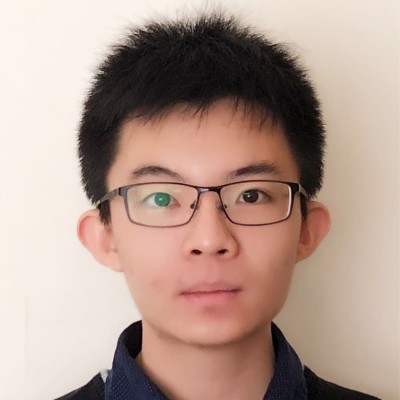
Hongpeng Guo
Staff Research Scientist at ByteDance
San Francisco, California, United States



Summary
🤩
Rockstar🎓
Top SchoolHongpeng Guo is a Staff Research Scientist based in San Francisco with seven years of experience building scalable ML and RL infrastructure across industry and research. He has driven core training and scaling efforts at ByteDance and helped build Ray Train at Anyscale, contributing notable improvements to the widely used Ray project (including Tune/Train refinements, AMD GPU sharing, and XGBoost/LightGBM trainer test updates). His background blends a PhD-level foundation from UIUC with hands-on systems work from internships at Google and Meta and a quant stint at Jane Street, giving him a rare mix of research rigor and production-grade engineering. Hongpeng focuses on making ML training infrastructure more reliable and user-friendly, often through continuous refactoring and tooling that reduces friction for practitioners. Colleagues rely on him to tame noisy systems and shipping resilient distributed training stacks that scale from notebooks to large RL workloads. He’s comfortable translating academic ideas into deployable infra while quietly improving developer experience in open-source ecosystems.
 7 years of coding experience
 3 years of employment as a software developer
 High School Diploma, High School Diploma at High School Attached to Northeast Normal UniversityThe University of Hong Kong (HKU)Doctor of Philosophy - PhD, Computer Science, Doctor of Philosophy - PhD, Computer Science at University of Illinois Urbana-Champaign
 Chinese, English
Github Skills (13)
machine-learning10
ray10
deeplearning-ai10
deep-learning10
python10
optimization9
distribute9
pytorch8
data-science8
tensorflow7
hyperparameter-optimization7
deploying7
llm6
Programming languages (3)
Github contributions (5)
ray-project/ray
Dec 2023 - Mar 2025
Ray is an AI compute engine. Ray consists of a core distributed runtime and a set of AI Libraries for accelerating ML workloads.
Role in this project: ML Engineer
ML EngineerContributions:171 reviews, 22 PRs, 1 push in 1 year 3 months
Contributions summary:Hongpeng Guo primarily contributed to the Ray project by making changes related to the Ray Tune and Ray Train components. These contributions included removing spammy logging, refining Jupyter Notebook reporting, and documenting accelerator type configurations for Ray Train. They also added an `env_float` utility, addressed restoration failures, and updated release tests for XGBoost and LightGBM trainers. Additionally, they worked on sharing AMD GPU devices using environment variables and introducing the V2 codebase of Ray Train.
pythonconsistsruntimetensorflowserving
hongpeng-guo/sglang
Dec 2024 - Feb 2025
SGLang is a fast serving framework for large language models and vision language models.
Contributions:59 pushes, 5 branches in 2 months
Find and Hire Top DevelopersWe’ve analyzed the programming source code of over 60 million software developers on GitHub and scored them by 50,000 skills. Sign-up on Prog,AI to search for software developers.