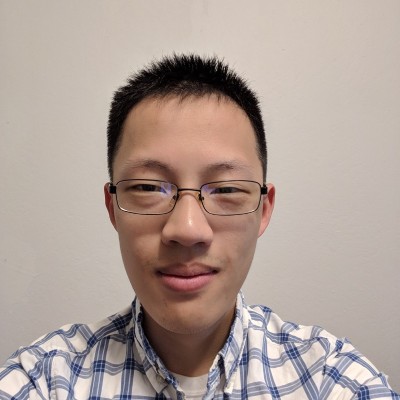
Howard Mao
Member Of Technical Staff at OpenAI
Campbell, California, United States



Summary
🤩
Rockstar🎓
Top SchoolHoward Mao is a versatile engineer with a decade of experience bridging software development and RTL design, currently contributing to TPU SoC infrastructure at OpenAI after a multi-year tenure as a silicon engineer at Google. He designs and implements reset, interrupt, CSR access, and performance-tracing infrastructure across large SoCs while also supporting RTL generation flows, combining low-level hardware rigor with software-first pragmatism. His background includes backend contributions to high-profile open-source projects like MongoDB—working on internal transactions, resharding, and chunk migration tests—and integrating MongoDB into ML metadata tooling, illustrating a knack for reliable data-driven systems. Trained at Columbia (B.S. Computer Engineering) and pursuing advanced study at UC Berkeley, he operates comfortably across chip, system, and software layers, often surfacing subtle correctness issues before they reach silicon.
 10 years of coding experience
 5 years of employment as a software developer
 Doctor of Philosophy - PhD Electrical and Electronics Engineering, Doctor of Philosophy - PhD Electrical and Electronics Engineering at University of California, BerkeleyBachelor's degree Computer Engineering, Bachelor's degree Computer Engineering at Columbia University
Github Skills (15)
javas10
databases10
transaction10
javascript10
mongodb10
back-end-development10
sharding10
data-integration10
sql-database10
java10
mongodb-database10
database-testing10
model-management9
machine-learning7
versioning7
Programming languages (4)
Github contributions (5)
mongodb/mongo
Jun 2018 - Jan 2023
The MongoDB Database
Role in this project: Back-end Developer
Back-end DeveloperContributions:660 commits, 47 pushes, 4 branches in 4 years 8 months
Contributions summary:Howard primarily worked on the MongoDB database, contributing to tests for internal transactions. Their commits involved addressing issues related to resharding and chunk migrations, focusing on ensuring transaction integrity and the correct application of operations. They modified existing test files in JavaScript. The commits touched the functionality of handling various database operations, involving ensuring proper code execution.
nosqlc-plus-plusmongodb-databasedatabasemongodb
VertaAI/modeldb
Feb 2017 - May 2017
Open Source ML Model Versioning, Metadata, and Experiment Management
Role in this project:Back-end Developer
Back-end DeveloperContributions:38 commits, 1 PR, 20 pushes in 2 months
Contributions summary:Howard primarily focused on integrating MongoDB into the `modeldb` project. Their contributions involved setting up the MongoDB connection, writing code to connect to the database, and implementing basic database operations. They developed a `MongoDBContext` class to handle the database connection, and they also wrote an example `main` method to insert and retrieve data from a collection to test the connection. The user also worked on making metadata values editable.
data-sciencedeep-learningmachine-learningmodel-versioningmlops
Find and Hire Top DevelopersWe’ve analyzed the programming source code of over 60 million software developers on GitHub and scored them by 50,000 skills. Sign-up on Prog,AI to search for software developers.