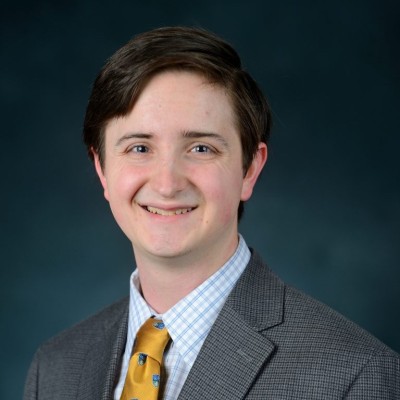
Hunter Gabbard
Deputy Chief Engineer AI ML at MORSE Corp
Washington, District of Columbia, United States



Summary
👤
Senior🎓
Top SchoolHunter Gabbard is Deputy Chief Engineer for AI/ML with nearly a decade of hands-on research and engineering experience at the intersection of machine learning, physics, and national-security R&D. He has led and advised high‑risk, high‑reward DARPA portfolios totaling over $100M, translating cutting-edge AI ideas into funded programs and transitions to defense stakeholders. His academic work accelerated gravitational-wave detection and parameter estimation—contributing ML methods adopted by LIGO and enhancements to the seminal PyCBC analysis toolkit used since GW150914. Comfortable moving between deep research and program management, he has a track record of packaging research into operational tools and winning competitive grants and contracts. Based in Washington, D.C., he blends PhD-level technical depth with practical delivery, from rapid on‑satellite signal classification to developing evaluation frameworks for robust generative models. A less obvious strength is his repeated success in making complex scientific ML accessible and deployable in mission-critical systems.
 9 years of coding experience
 8 years of employment as a software developer
 Study Abroad (6 months) Physics and Astronomy, Study Abroad (6 months) Physics and Astronomy at The University of EdinburghBachelor of Science (B.S.) Physics and Astronomy, Bachelor of Science (B.S.) Physics and Astronomy at University of MississippiVista Ridge High SchoolDoctor of Philosophy (Ph.D.) Physics and Astronomy, Doctor of Philosophy (Ph.D.) Physics and Astronomy at University of Glasgow
 German, English
Stackoverflow
1reputation
0reached
0answers
0questions

Github Skills (10)
gravity10
analyse10
grav10
python10
signal-processing10
gr10
numpy10
data-analysis9
time-series9
astronomy8
Programming languages (3)
Github contributions (5)
gwastro/pycbc
May 2017 - Jun 2017
Core package to analyze gravitational-wave data, find signals, and study their parameters. This package was used in the first direct detection of gravitational waves (GW150914), and is used in the ongoing analysis of LIGO/Virgo data.
Role in this project: Back-end Developer
Back-end DeveloperContributions:8 commits, 16 PRs, 47 comments in 1 month
Contributions summary:Hunter primarily contributed to the `pycbc` package, focusing on the implementation and refinement of the `qtransform` functionality. Their work involved creating, debugging and improving the core functions for calculating the q-transform and related processes, including the tiling mechanism. The user also streamlined imports and implemented improvements in the q-transform plotting mechanism, adding interpolation and spectrogram plotting functionality. These changes significantly enhanced the core analysis tools within the repository.
pythongwastrosignal-processingneutron-starparameters
hagabbar/cINNamon
Nov 2018 - Jun 2019
Invertible neural network for gravitational wave parameter estimation
Contributions:33 commits, 33 PRs, 59 pushes in 6 months
gravitationalparameterwaveestimationneural-network
Find and Hire Top DevelopersWe’ve analyzed the programming source code of over 60 million software developers on GitHub and scored them by 50,000 skills. Sign-up on Prog,AI to search for software developers.