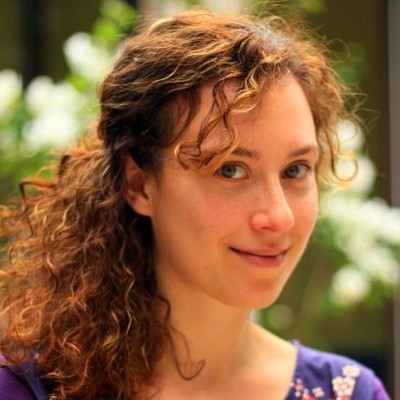
Irina Nicolae
ML & Security Engineer SEAR at Apple
Stuttgart, Baden-Württemberg, Germany



Summary
🤩
Rockstar🎓
Top SchoolIrina Nicolae is an AI researcher and ML & Security Engineer with nearly a decade of experience at the crossroads of machine learning and security, now working at Apple SEAR. She has led trustworthy AI and adversarial robustness programs at Bosch and IBM Research, co-creating the widely used Adversarial Robustness Toolbox and winning competitive DARPA and EU funding for secure-AI projects. Her work spans adversarial ML, LLM evaluation, ML-driven fuzzing (achieving 20x fault detection improvements in CAN fuzzing), and practical deployments of generative models in enterprise settings. A frequent presenter at top academic and security venues (ICML, ICLR, NeurIPS, Black Hat, RSA), she combines rigorous theoretical foundations from her PhD with hands-on engineering across tech, automotive, and industrial domains. Colocated in Stuttgart, she is known for translating research into internal tooling, risk frameworks, and demonstrable robustness improvements in production-grade systems.
 9 years of coding experience
 3 years of employment as a software developer
 Doctor of Philosophy - PhD Machine learning, Doctor of Philosophy - PhD Machine learning at Université Jean Monnet Saint-EtienneEngineer Degree Computer Science, Engineer Degree Computer Science at National School of Computer Science and Applied Mathematics of GrenobleColegiul National de Informatica "Tudor Vianu"Bachelor Computer Science, Bachelor Computer Science at Universite Joseph Fourier de GrenobleEngineering Degree Computer Science, Engineering Degree Computer Science at Universitatea Politehnica din Bucuresti
 English, French, Romanian
Github Skills (9)
keras10
adversarial-machine-learning10
machine-learning10
adversarial-attacks10
tensorflow10
python10
jupyter-notebook8
computer-vision8
pytorch8
Programming languages (2)
Github contributions (5)
Trusted-AI/adversarial-robustness-toolbox
May 2017 - Jun 2020
Adversarial Robustness Toolbox (ART) - Python Library for Machine Learning Security - Evasion, Poisoning, Extraction, Inference - Red and Blue Teams
Role in this project: ML Engineer
ML EngineerContributions:8 releases, 886 commits, 30 PRs in 3 years 1 month
Contributions summary:Irina significantly contributed to the development and enhancement of adversarial example generation capabilities within the Adversarial Robustness Toolbox (ART). Their work involved extending feature squeezing to support data ranges beyond the conventional [0, 1] interval. They introduced a demonstration notebook to showcase adversarial attacks, defenses, and evaluation metrics, demonstrating a focus on practical application and usability. Additionally, they addressed bugs and adapted existing attacks for feature vectors, improving the robustness of the overall library.
extractionpythonfairness-mlrobustnessadversarial-machine-learning
ririnicolae/ririnicolae.github.io
Jan 2023 - Mar 2025
Contributions:4 pushes, 1 branch in 2 years 2 months
Find and Hire Top DevelopersWe’ve analyzed the programming source code of over 60 million software developers on GitHub and scored them by 50,000 skills. Sign-up on Prog,AI to search for software developers.