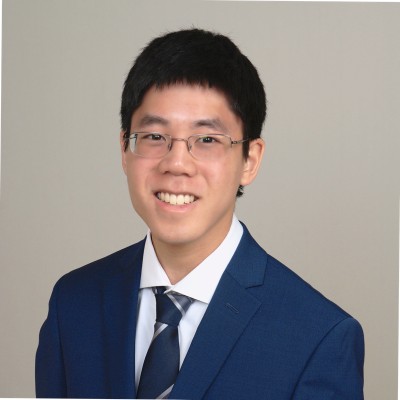
Jason Wong
Graduate Student Researcher
Berkeley, California, United States



Summary
👤
Senior🎓
Top SchoolJason Wong is a PhD student and Graduate Student Instructor at UC Berkeley specializing in theoretical and mathematical physics with nine years of research and teaching experience. He combines deep high-energy theory work—using anomaly-mediated supersymmetry breaking to probe chiral gauge dynamics—with hands-on machine-learning for particle physics, having developed Lorentz-equivariant graph models for jet data and GNN-based jet tagging. At Berkeley he teaches introductory physics labs and discussion sections, tutors quantum mechanics, and mentors undergraduates on computational relativity projects like Kerr and Schwarzschild simulations. His background spans astrophysical modeling of X-ray pulsars and black hole emission to modern collider ML, giving him a rare blend of analytic theory, numerical simulation, and applied ML. Based in Berkeley, he brings both pedagogical skill and a track record of translating theoretical problems into computational tools for experimental and simulation data.
 9 years of coding experience
 3 years of employment as a software developer
 Doctor of Philosophy - PhD Theoretical and Mathematical Physics, Doctor of Philosophy - PhD Theoretical and Mathematical Physics at University of California, Berkeley
Github Skills (2)
javascript9
open-source9
Programming languages (1)
Github contributions (5)
PoliticalComputerScience/TwitterToolkit
Feb 2019 - Jun 2019
Contributions:13 pushes in 3 months
PoliticalComputerScience/RollCall
Oct 2018 - Feb 2019
Contributions:50 commits, 32 pushes in 4 months
Find and Hire Top DevelopersWe’ve analyzed the programming source code of over 60 million software developers on GitHub and scored them by 50,000 skills. Sign-up on Prog,AI to search for software developers.