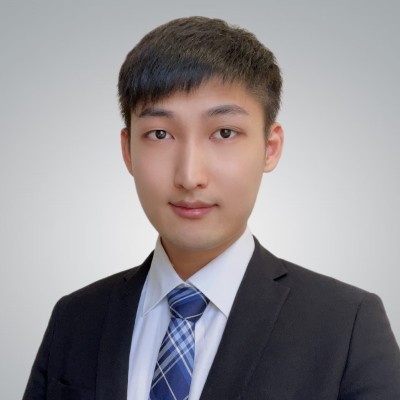
Jiaqi Gu
Assistant Professor at Arizona State University
Tempe, Arizona, United States



Summary
🤩
Rockstar🎓
Top SchoolJiaqi Gu is an Assistant Professor at Arizona State University specializing in emerging hardware for efficient computing, hardware-algorithm co-design, and optical/quantum neurocomputing, with a PhD from UT Austin. He blends deep academic achievement—90+ peer-reviewed publications and multiple best paper and dissertation awards—with hands-on engineering, contributing CUDA kernels to the widely used DREAMPlace VLSI placer and pruning tools for torchquantum. Jiaqi’s work spans photonics, post-CMOS electronics, and AI-software/hardware stacks, reflecting collaborations with industry labs including NVIDIA and Meta. Known for integrating algorithmic insight with practical accelerator and CAD tool development, he runs an active research group with open PhD positions.
 9 years of coding experience
 6 years of employment as a software developer
 Doctor of Philosophy - PhD, Electrical and Computer Engineering, Doctor of Philosophy - PhD, Electrical and Computer Engineering at The University of Texas at AustinBachelor of Engineering - BE, EECS, Ranking 2nd in School of Engineering, 3.91 / 4.0, Bachelor of Engineering - BE, EECS, Ranking 2nd in School of Engineering, 3.91 / 4.0 at Fudan University
Github Skills (12)
neural-network10
cuda10
quantum-computing10
pytorch10
machine-learning10
deep-learning10
q-learning10
gpu-acceleration10
vlsi10
python10
deeplearning-ai9
system8
Programming languages (7)
Github contributions (5)
limbo018/DREAMPlace
May 2019 - Aug 2021
Deep learning toolkit-enabled VLSI placement
Role in this project: ML Engineer
ML EngineerContributions:93 commits, 32 pushes, 1 branch in 2 years 4 months
Contributions summary:Jiaqi primarily contributed to the `dreamplace` repository, a deep learning toolkit for VLSI placement, by updating kernels and CUDA functionalities. The user implemented and refined various CUDA kernels related to weighted average wirelength and electric potential calculations. Furthermore, the user focused on adding fence region functionalities which is used to regularize the cell placement process.
deep-learningvlsivlsi-physical-designpytorchvlsi-placement
mit-han-lab/torchquantum
Mar 2021 - May 2021
A PyTorch-based framework for Quantum Classical Simulation, Quantum Machine Learning, Quantum Neural Networks, Parameterized Quantum Circuits with support for easy deployments on real quantum computers.
Role in this project:ML Engineer
ML EngineerContributions:10 commits, 3 PRs, 11 pushes in 1 month
Contributions summary:Jiaqi primarily focused on implementing and improving the training process, particularly around pruning techniques for the quantum machine learning models. Their work included the development of a pruning trainer, a pruning method, and a scheduler to control the pruning amount. Additionally, the user added a new dataset for vowel recognition, expanding the available data for training and testing the models.
machine-learningneural-networkpytorchsimulationpytorch-quantum
Find and Hire Top DevelopersWe’ve analyzed the programming source code of over 60 million software developers on GitHub and scored them by 50,000 skills. Sign-up on Prog,AI to search for software developers.