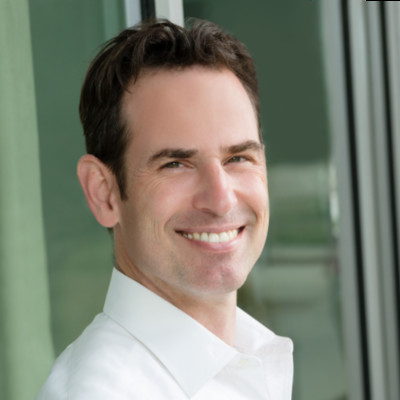
John Iversen
Associate Professor
Hamilton, Ontario, Canada



Summary
👤
Senior🎓
Top SchoolJohn Iversen is an associate professor and computational cognitive neuroscientist with 14 years of research experience probing how music, language and the motor system shape perception and learning. He directs large-scale, longitudinal projects—most notably the SIMPHONY study and UCSD’s NEA Research Lab—applying mobile brain/body imaging and advanced time-series, spectral and multivariate methods to real-world cognition. Known for bridging blue-sky theory and applied classroom research, he combines MEG/EEG expertise with MATLAB, Python and R to develop blind-source separation, causality models and neural-network analyses. His work uniquely emphasizes rhythm and temporal perception across development, education and social interaction, and he investigates motor contributions to auditory processing using MoBI and VR. Trained at MIT, Cambridge and Harvard, he brings a rare mix of deep theoretical grounding and practical, multimodal experimental design in neurodevelopmental and music-based interventions.
 15 years of coding experience
 31 years of employment as a software developer
 PhD, Speech and Hearing Biosciences and Technology, PhD, Speech and Hearing Biosciences and Technology at Massachusetts Institute of TechnologyMPhil, History & Philosophy of Science, MPhil, History & Philosophy of Science at University of CambridgeBA, Physics, BA, Physics at Harvard University
Github Skills (49)
apollo10
matlab9
eeglab9
octave8
electrophysiology8
eda7
colours6
x126
signal-processing6
orbital-mechanics5
scheme4
relaxng4
file-format4
r-programming4
syntax-highlighting4
Programming languages (10)
Github contributions (5)
jiversen/RhythmNetwork
Jun 2019 - Jun 2026
Contributions:11 pushes, 3 branches in 7 years 1 month
jiversen/ji_utils
Feb 2021 - Jun 2026
Contributions:1 release, 31 pushes, 1 branch in 5 years 4 months
Find and Hire Top DevelopersWe’ve analyzed the programming source code of over 60 million software developers on GitHub and scored them by 50,000 skills. Sign-up on Prog,AI to search for software developers.