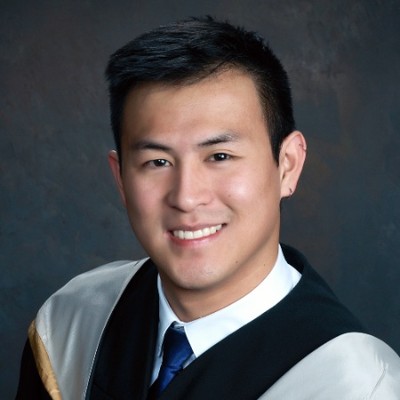
Justin Sing
Computational Proteomics Scientist
Toronto, Ontario, Canada



Summary
👤
Senior🎓
Top SchoolJustin Sing is a computational biologist and PhD student at the University of Toronto with eight years of experience developing algorithms and machine learning pipelines for mass spectrometry proteomics and multi-omics personalized medicine. He has a strong track record of improving quantification of post-translational modifications (raising quantified phosphopeptides by 21% while maintaining 97% ID consistency) and building production-ready tools, including a Rust library for deep-learning peptide property prediction during an industry internship. As a back-end developer and test automation engineer, he has contributed to the widely used OpenMS codebase, focusing on robust modification handling and test coverage. Justin also co-founded a biotech startup that delivered a rapid microbiome-based CAD screening prototype and led its early commercialization efforts. He combines academic rigor with startup pragmatism and a commitment to open-source collaboration to translate method development into clinical and software impact.
 8 years of coding experience
 9 years of employment as a software developer
 Bachelor of Technology Biotechnology, Bachelor of Technology Biotechnology at McMaster UniversityDoctor of Philosophy - PhD Computational and Systems Biology, Doctor of Philosophy - PhD Computational and Systems Biology at University of Toronto
 English
Github Skills (8)
algorithms10
c-language10
mass-spectrometry10
openms10
cprogramming-language10
proteins10
testing10
meta8
Programming languages (12)
Github contributions (5)
OpenMS/OpenMS
Jun 2021 - Aug 2022
The codebase of the OpenMS project
Role in this project: Back-end Developer & Test Automation Engineer
Back-end Developer & Test Automation EngineerContributions:53 reviews, 17 commits, 27 PRs in 1 year 2 months
Contributions summary:Justin primarily focused on bug fixes and refactoring within the `MRMAssay` module, specifically addressing issues related to modifications sequence handling. They implemented checks to ensure the correct application of modifications, considering residue specificity. Moreover, the user added and refined test cases, ensuring the correctness of the modifications and related logic. This included refactoring existing tests and incorporating new test cases to validate the implemented modifications.
openmsc-plus-plusms-datamass-spectrometrylinux
singjc/pyprophet
Mar 2020 - Jun 2026
PyProphet: Semi-supervised learning and scoring of OpenSWATH results.
Contributions:4 reviews, 210 pushes, 26 branches in 6 years 4 months
supervised-learningsupervisedscoringsemisemi-supervised-learning
Find and Hire Top DevelopersWe’ve analyzed the programming source code of over 60 million software developers on GitHub and scored them by 50,000 skills. Sign-up on Prog,AI to search for software developers.