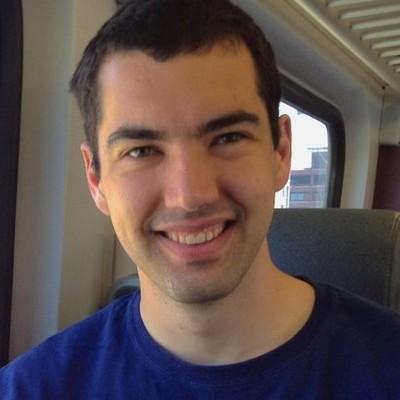
Kale Kundert
Postdoctoral Fellow at Harvard Medical School
San Francisco, California, United States



Summary
🤩
Rockstar🎓
Top SchoolKale Kundert is a synthetic biologist and postdoctoral fellow with ~15 years of research and software experience, currently advancing molecular design in the Church Lab at Harvard and finishing a Ph.D. in Biophysics at UCSF. He develops computational-experimental pipelines—most notably "Pull Into Place" (PIP) built on Rosetta, to remodel protein backbones and reposition catalytic sidechains—and has contributed thousands of lines of code to core protein design tools. His work also includes engineering small-molecule–inducible guide RNAs to enable independently regulated CRISPR guides and directed evolution using FACS, aiming to make complex genetic circuits tractable across organisms. An active open-source contributor, he has improved widely used projects like more-itertools and pytest by adding utility functions and robust float-comparison testing, reflecting a strong focus on precision and reproducibility. Based in San Francisco, he blends hands-on bench skills with production-quality software development to drive translational advances in human and environmental health.
 15 years of coding experience
 2 years of employment as a software developer
 B.S., Chemical biology, B.S., Chemical biology at University of California, BerkeleyFoothill CollegePh.D., Biophysics, Ph.D., Biophysics at University of California, San Francisco
Stackoverflow
1,302reputation
237kreached
55answers
2questions

Github Skills (18)
unit-testing10
lib10
float3210
pytest10
python10
testing10
floating-point10
itertools10
unit-test10
test-automation10
type-annotations8
numpy8
documentation7
embedded6
magic-methods6
Programming languages (11)
Github contributions (5)
more-itertools/more-itertools
Dec 2017 - Oct 2021
More routines for operating on iterables, beyond itertools
Role in this project: Back-end Developer
Back-end DeveloperContributions:11 commits, 6 PRs, 24 comments in 3 years 10 months
Contributions summary:Kale primarily contributed to the `more-itertools` library by adding new functions and improving existing ones. They introduced `mark_first()`, `mark_last()` and later refactored to `mark_ends()` to provide more flexible ways to mark the beginning and end of iterables. Furthermore, the user fixed doctests and type annotations and fixed the implementation of `zip_broadcast()` to address reported issues. These changes demonstrate an understanding of the library's core functionality and a focus on enhancing its usability and correctness.
itertoolsoperatingroutinesiterablesbeyond
pytest-dev/pytest
Mar 2021 - Aug 2021
The pytest framework makes it easy to write small tests, yet scales to support complex functional testing
Role in this project:QA Engineer / Test Automation Engineer
QA Engineer / Test Automation EngineerContributions:4 reviews, 2 commits, 13 PRs in 5 months
Contributions summary:Kale's primary contribution involves enhancing the pytest framework by implementing and refining the `approx` functionality. This includes adding a new way to compare floats for more accurate testing, improving the representation of floating-point numbers, and addressing edge cases like infinite and NaN values. The user also significantly increased the test coverage for the `approx` feature and improved documentation, demonstrating a focus on robust testing and usability of the testing framework.
scalespythonfunctional-testingtestingpytest-framework
Find and Hire Top DevelopersWe’ve analyzed the programming source code of over 60 million software developers on GitHub and scored them by 50,000 skills. Sign-up on Prog,AI to search for software developers.