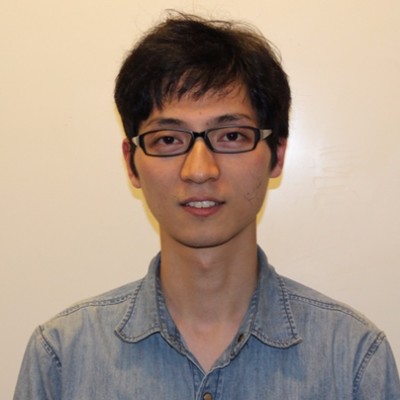
Kehang Han
Research Engineer at Google DeepMind
Los Angeles, California, United States



Summary
🤩
Rockstar🎓
Top SchoolKehang Han is a research engineer with 11 years of experience specializing in LLM engineering, multimodal agents, and fast inference, currently working at Google DeepMind after a research role at Google Brain. He combines academic rigor from a PhD at MIT and a BS from Tsinghua with hands-on contributions to high-profile open-source projects like tensorflow/datasets, T5X, and Google’s uncertainty-baselines where he added graph neural network support and dataset tooling. His background spans applied ML, back-end algorithmic work (e.g., pruning and memory fixes for ReactionMechanismGenerator), and production-focused training pipeline improvements. Based in Los Angeles and affiliated with MIT, he brings a rare mix of research depth and practical engineering that shortens the path from prototype to scalable deployment. Notably, he has contributed few-shot and domain-specific datasets and optimizer/scheduler advances that improve reproducibility and efficiency in large-scale model training.
 11 years of coding experience
 2 years of employment as a software developer
 PhD (Doctorate), PhD (Doctorate) at Massachusetts Institute of TechnologyBachelor of Science (BS), Bachelor of Science (BS) at Tsinghua University
 Chinese, English
Stackoverflow
1reputation
0reached
0answers
0questions

Github Skills (34)
algorithms10
integrate10
python10
evaluation10
model-driven10
data-set10
machine-learning10
integrations10
data-model10
flax10
datasets10
model-building10
chemistry10
eval10
deep-learning10
Programming languages (5)
Github contributions (5)
ReactionMechanismGenerator/RMG-Py
Jul 2014 - May 2018
Python version of the amazing Reaction Mechanism Generator (RMG).
Role in this project: Back-end Developer
Back-end DeveloperContributions:2 releases, 1049 commits, 154 PRs in 3 years 10 months
Contributions summary:Kehang contributed significantly to the core functionality of the Reaction Mechanism Generator (RMG) project, as evidenced by their work on the pruning algorithm and related documentation. They refactored the pruning process, changing the metric used for removing species from the edge model and implemented more control over the pruning performance. Moreover, the user added example parameters and documentation for pruning parameters. They also addressed memory issues by adding garbage collection after pruning and cleaning up species references.
mechanismchemical-engineeringchemistrypythonreaction
google-research/t5x
May 2022 - Jan 2023
Role in this project:ML Engineer
ML EngineerContributions:1 review, 8 commits, 5 PRs in 8 months
Contributions summary:Kehang primarily contributed to the development and enhancement of the T5X framework, with a focus on model configuration and optimization. Their work includes adding examples using alternative optimizers like AdamW and integrating a learning rate scheduler. Furthermore, the user updated the training and evaluation process by defaulting to utilize training and evaluation datasets. These modifications suggest a focus on improving the training pipeline and model efficiency within the T5X framework.
Find and Hire Top DevelopersWe’ve analyzed the programming source code of over 60 million software developers on GitHub and scored them by 50,000 skills. Sign-up on Prog,AI to search for software developers.