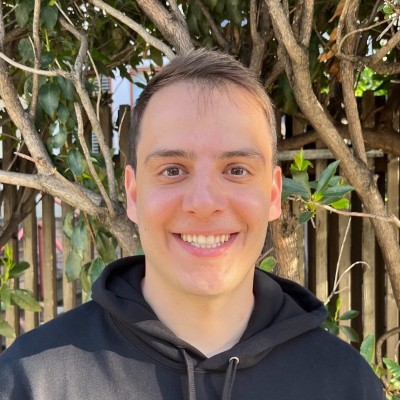
Kevin Zakka
PhD Candidate
San Francisco Bay Area United States



Summary
🤩
Rockstar🎓
Top SchoolKevin Zakka is a PhD candidate in computer science at UC Berkeley with 11 years of hands-on experience building ML systems for robotics, simulation, and vision. He has contributed to high-impact open-source projects like DeepMind's dm_control and Google Research (XIRL), implemented core attention and TSDF fusion modules in PyTorch, and improved MuJoCo bindings and tooling for robust simulation workflows. His industry stints include multiple research and intern roles at Google, Boston Dynamics, and X (Everyday Robots), with publications and top-conference recognitions in imitation learning and robotic manipulation. A seasoned TA for Stanford’s CS231n, he pairs rigorous academic training with practical engineering—often optimizing for performance and cross-platform (CPU/GPU/conda) robustness in complex codebases.
 11 years of coding experience
 3 years of employment as a software developer
 Doctor of Philosophy - PhD, Computer Science, Doctor of Philosophy - PhD, Computer Science at University of California, BerkeleyMaster's degree, Computer Science, Master's degree, Computer Science at Stanford University
Github Skills (40)
simulation10
pytorch10
robotics10
loss-functions10
python10
simulator10
simulations10
machine-learning10
reinforcement-learning10
physics10
tensorflow10
ai10
build-automation10
computer-vision10
jupyter-notebook10
Programming languages (11)
Github contributions (5)
kevinzakka/recurrent-visual-attention
Nov 2017 - May 2020
A PyTorch Implementation of "Recurrent Models of Visual Attention"
Role in this project: ML Engineer
ML EngineerContributions:78 commits, 2 PRs, 60 pushes in 2 years 6 months
Contributions summary:Kevin implemented a `spatial_glimpse` module and other related modules for a recurrent visual attention model using PyTorch, based on the "Recurrent Models of Visual Attention" paper. They added support for both CPU and GPU operations for the retina and glimpse sensor. The user also made improvements to patch extraction, implemented a baseline network, and worked on the training loop, demonstrating a focus on the core components of the model and its training process. They also added example test code.
pytorchramdeep-learningattention-mechanismvisual-attention
google-deepmind/mujoco
Mar 2022 - Dec 2022
Multi-Joint dynamics with Contact. A general purpose physics simulator.
Role in this project:Back-end Developer & DevOps Engineer
Back-end Developer & DevOps EngineerContributions:6 reviews, 47 commits, 26 PRs in 9 months
Contributions summary:Kevin primarily contributed to improving the build and installation process of the Python bindings for the MuJoCo physics simulator. They added support for conda environments and provided detailed instructions in the README file. Furthermore, the user addressed code comments, fixed typos, and added an example benchmark for methods in engine_util_spatial, demonstrating a focus on code quality and performance optimization. The user also worked on handling invalid joint types in URDF conversion, showing a focus on robustness.
physics-enginephysicsroboticsrobotics-simulationbullet-physics
Find and Hire Top DevelopersWe’ve analyzed the programming source code of over 60 million software developers on GitHub and scored them by 50,000 skills. Sign-up on Prog,AI to search for software developers.