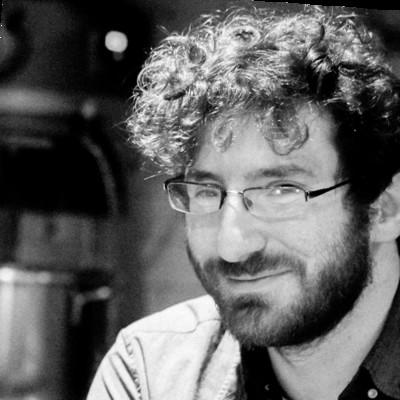
Leo Meyerovich
Founder at Graphistry
San Francisco, California, United States



Summary
🤩
Rockstar🎓
Top SchoolLeo Meyerovich is a founder and GPU-first engineering leader with 13 years of experience building high-performance visual analytics and developer-facing systems from research prototypes to production. He founded Graphistry to scale investigations 100x by combining end-to-end GPU dataframes, graph visualization, and graph AI, and his team contributed foundational work to Apache Arrow and RAPIDS.ai. A PhD from UC Berkeley, Leo’s research produced one of the first multicore browsers and GPU-accelerated big-data visualization techniques that influenced browser engines and earned multiple PLDI SRC awards and tech transfer. His earlier academic work also bridged programming languages with social theory, earning SIGPLAN and OOPSLA recognition—an uncommon blend of hard systems engineering and sociotechnical insight. An active open-source maintainer (notably on PyGraphistry) and inventor of early GPU dataframe tooling and reactive JS libraries, he pairs deep systems thinking with product-focused execution for security, fraud, and supply-chain analytics. Based in San Francisco, he combines durable research impact with hands-on backend, DevOps, and release management experience.
 13 years of coding experience
 2 years of employment as a software developer
 Doctor of Philosophy (PhD) Computer Science, Doctor of Philosophy (PhD) Computer Science at University of California, BerkeleyBachelor of Science (BSc) Computer Science, Bachelor of Science (BSc) Computer Science at Brown University
 Russian, Spanish
Stackoverflow
51reputation
14kreached
1answer
0questions

Github Skills (13)
configurations10
api10
python10
configuration-file10
apidoc10
version-control9
git9
release-management8
testing8
documentation8
google-chrome-extension6
javascript6
google-chrome6
Programming languages (14)
Github contributions (5)
graphistry/pygraphistry
Jan 2014 - Dec 2022
PyGraphistry is a Python library to quickly load, shape, embed, and explore big graphs with the GPU-accelerated Graphistry visual graph analyzer
Role in this project: Back-end Developer & DevOps Engineer
Back-end Developer & DevOps EngineerContributions:5 releases, 692 reviews, 1068 commits in 9 years
Contributions summary:Leo's contributions centered on bug fixes, enhancements, and feature implementations within the `PyGraphistry` library, primarily focused on the `etl.py` module. The work involved addressing unbound identifiers, enabling URL parameter overrides in settings, improving the API key system, and changing parameter orders, indicating a focus on backend functionality and configuration. Furthermore, the commits included version bumps and documentation updates, demonstrating involvement in release management and project documentation.
csvpythonbig-graphsrapidstigergraph
Superconductor/superconductor
May 2013 - Jul 2014
Contributions:49 commits in 1 year 2 months
visualizationjavascriptbig-datadata-visualizationbig-data-visualization
Find and Hire Top DevelopersWe’ve analyzed the programming source code of over 60 million software developers on GitHub and scored them by 50,000 skills. Sign-up on Prog,AI to search for software developers.