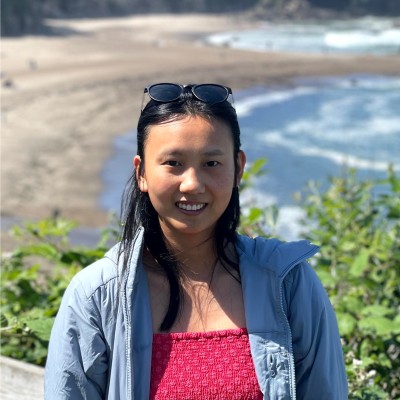
Linda Wang
Machine Learning Engineer at Meta
San Francisco, California, United States



Summary
🤩
Rockstar🎓
Top SchoolLinda Wang is a machine learning engineer with a decade of hands-on experience building computer vision and perception systems for autonomous vehicles and medical imaging. Currently on Meta’s ML team and previously on Lyft Level 5’s Perception team, she blends academic research in visual scene understanding from the University of Waterloo with production-focused engineering, optimizing models for speed, accuracy, and footprint. Her open-source contributions include practical enhancements to PyTorch’s torchtune—adding knowledge distillation recipes, gradient logging and clipping for large models like Llama3.2—and a COVID-Net dataset and preprocessing pipeline for medical image classification. Comfortable across research and production, she has a track record of taking ideas from dataset curation and model design to distributed finetuning and testing at scale. Based in San Francisco, she brings a systems-design background and a knack for making research-enabled models operational.
 10 years of coding experience
 5 years of employment as a software developer
 High School, High School at Saint Mildred's-Lightbourn SchoolBachelor's Degree, Systems Design Engineering, Bachelor's Degree, Systems Design Engineering at University of Waterloo
 English, Chinese
Github Skills (21)
pytorch10
distributed-training10
dis10
python10
machine-learning10
distill10
keras10
tensorflow10
trainings10
fine-tuning10
modeling10
pandas9
numpy9
data-preprocessing9
resnet9
Programming languages (2)
Github contributions (5)
lindawangg/COVID-Net
Mar 2020 - Nov 2020
COVID-Net Open Source Initiative
Role in this project: Data Scientist
Data ScientistContributions:3 reviews, 119 commits, 12 PRs in 7 months
Contributions summary:Linda's primary contribution appears to be in the development of a dataset and training a ResNet model for classifying medical images. They created a script to combine multiple datasets, split the data into training and testing sets, and generated text files for data loading. The user also developed a preprocessing script and trained a ResNet model, with associated callbacks, to classify the images. These actions demonstrate a clear focus on creating and training machine learning models.
chest-radiographyinitiativecovid-netcovidx-datasetcoronavirus-detect
pytorch/torchtune
Aug 2024 - Dec 2024
PyTorch native post-training library
Role in this project:ML Engineer
ML EngineerContributions:22 reviews, 5 PRs, 1 push in 3 months
Contributions summary:Linda focused on enhancing the `torchtune` library, which is designed for post-training of PyTorch models. Their contributions involved the implementation of knowledge distillation (KD) recipes for both single-device and distributed training setups. Furthermore, they introduced features like gradient norm logging and improved the overall finetuning process, with particular emphasis on applying those changes to the Llama3.2 model. Their work included the addition of gradient clipping options in several recipe configurations and involved modifications to the test suite as well.
Find and Hire Top DevelopersWe’ve analyzed the programming source code of over 60 million software developers on GitHub and scored them by 50,000 skills. Sign-up on Prog,AI to search for software developers.