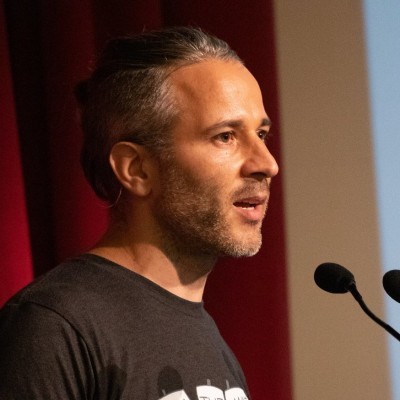
Marc Garcia
Senior Data Scientist
Thailand



Summary
🤩
Rockstar🎓
Top SchoolMarc Garcia is a Senior Data Scientist with about 18 years of professional experience and over a decade focused on data science and engineering. Based in Thailand, he blends deep Python ecosystem expertise with practical backend engineering—contributing to high-profile open-source projects like pandas, Polars, Ibis, and the ASV benchmarking tool where he has taken on release management and CI work. His background spans AI and finance with master's degrees in Artificial Intelligence and International Finance, enabling him to translate complex models into production-ready, well-documented solutions. He is particularly strong at bridging documentation, developer experience, and performance optimizations, from fixing Jupyter interactive bugs to optimizing Rust-backed dataframe sinks. Colleagues can expect a detail-oriented engineer who improves both code correctness and the user-facing clarity of data tooling.
 18 years of coding experience
 Master's degree, International Master in Finance, Master's degree, International Master in Finance at EADA - Escuela de Alta Dirección y AdministraciónUPC Universitat Politècnica de CatalunyaUOC (Universitat Oberta de Catalunya)
 French, Portuguese, Catalan, Spanish, English
Stackoverflow
3,387reputation
254kreached
26answers
9questions
jupyter-notebook
top-5%
pandas
top-5%
jupyter
top-5%
python
top-5%

Github Skills (30)
benchmark10
python10
apidoc10
dataframes10
pandas10
benchmarking10
docstrings10
cicd10
dataframe10
release-management10
api10
rust10
documentation10
data-analysis10
jupyter9
Programming languages (15)
Github contributions (5)
pandas-dev/pandas
Jul 2017 - Jan 2023
Flexible and powerful data analysis / manipulation library for Python, providing labeled data structures similar to R data.frame objects, statistical functions, and much more
Role in this project: Data Scientist & Documentation Specialist
Data Scientist & Documentation SpecialistContributions:8 releases, 642 reviews, 224 commits in 5 years 7 months
Contributions summary:Marc primarily contributed to improving the pandas documentation, focusing on enhancing docstrings and fixing documentation errors. Their commits included modifications to docstrings of the "pop" and "reset_index" methods, as well as general improvements to docstrings. The user also addressed documentation style issues, fixed typos, and ensured that code examples and related information were clearly presented in the documentation files.
pythondatalabeled-datamanipulationdataframes
ibis-project/ibis
Mar 2020 - Oct 2021
the portable Python dataframe library
Role in this project:Back-end Developer
Back-end DeveloperContributions:305 reviews, 200 commits, 354 PRs in 1 year 7 months
Contributions summary:Marc's commits primarily focused on improving the project's documentation, specifically updating the minimum Python version requirements and reorganizing the documentation structure for improved clarity and organization. Their work also involved addressing issues with the documentation build process, removing backends to resolve disk space problems, and integrating new website pages, enhancing the overall user experience. Furthermore, the user fixed a critical bug related to the interactive mode in Jupyter notebooks, ensuring that expressions return values as expected.
polarspythondaskdataframesdata-science
Find and Hire Top DevelopersWe’ve analyzed the programming source code of over 60 million software developers on GitHub and scored them by 50,000 skills. Sign-up on Prog,AI to search for software developers.