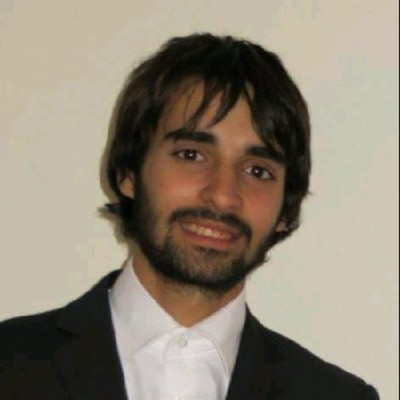
Marco Giacalone
Applied Physicist In Detector Simulation
Commune de Prévessin-Moëns, Auvergne-Rhône-Alpes, France



Summary
👤
Senior🎓
Top SchoolMarco Giacalone is an applied physicist and detector simulation expert with nine years of hands-on experience at CERN and INFN, blending particle-physics analysis, firmware and DAQ hardware development, and software engineering. He has led TOF detector operations as system run coordinator, developed Python GUIs and firmware for ALICE DAQ boards, and contributed backend and build-system fixes to the widely used ALICE software repositories. Marco combines strong C++/Python skills, electronics design and radiation-testing experience with practical DevOps knowledge that improved reproducibility across GRID environments. Based in the Geneva area, he brings a rare mix of experimental operations, hardware validation and open-source contributions to large-scale high-energy physics experiments.
 9 years of coding experience
 3 years of employment as a software developer
 University of BolognaDoctor of Philosophy - PhD, Physics, Doctor of Philosophy - PhD, Physics at Alma Mater Studiorum - Università di Bologna
 Italian, English, Spanish, French
Github Skills (18)
application-framework10
c-language10
alice10
data-analytics10
build-system10
bash10
high-energy-physics10
cmake10
exp10
script10
physics10
cprogramming-language10
data-analysis10
cicd9
cd9
Programming languages (9)
Github contributions (5)
alisw/AliPhysics
Mar 2021 - Jun 2022
ALICE Analysis Repository
Role in this project: Back-end Developer
Back-end DeveloperContributions:7 commits, 11 PRs, 1 comment in 1 year 2 months
Contributions summary:Marco primarily contributed to the ALICE physics analysis repository by modifying code related to the handling and analysis of heavy-flavor decay candidates within the ALICE experiment data. Their work involved increasing momentum limits in histograms, implementing tracklet subtraction for soft pions from D* mesons, and adding functionality for generating and using spherocity quantiles. Furthermore, they improved the framework by automatically converting mass values to MeV units and added the ability to use unweighted S0 selection.
physicspythoncernanalysisalice
alisw/alidist
Apr 2022 - Dec 2022
Recipes to build ALICE software
Role in this project:DevOps Engineer / Build & Release Engineer
DevOps Engineer / Build & Release EngineerContributions:42 reviews, 6 commits, 42 PRs in 7 months
Contributions summary:Marco primarily contributed to the build and deployment process within the ALICE software ecosystem. Their work focused on defining module files for software packages like EPOS4 and making adjustments to the build scripts (e.g., `rivet.sh`, `agile.sh`, and `epos4.sh`) to integrate these packages correctly. The user addressed issues related to environment variables, directory structures, and dependency management to ensure proper functionality. These changes aimed to improve the reproducibility and usability of the software on various computing environments, including the GRID.
physicsrecipescernalicealice-experiment
Find and Hire Top DevelopersWe’ve analyzed the programming source code of over 60 million software developers on GitHub and scored them by 50,000 skills. Sign-up on Prog,AI to search for software developers.