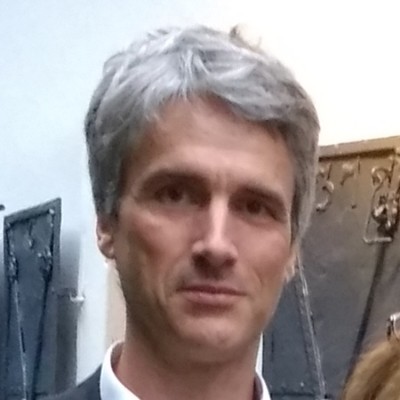
Martin Krasser
Founder at Gradion AI
Vienna, Austria



Summary
🤩
Rockstar🎓
Top SchoolMartin Krasser is a Vienna-based founder and freelance AI engineer with 16 years of experience building distributed systems and production-grade machine learning applications. He blends deep expertise in event-sourced and reliable distributed architectures with hands-on ML work—from Gaussian processes and super-resolution models to face recognition pipelines—demonstrated by sustained open-source contributions. As founder of Gradion AI and former ML director roles, he repeatedly bridges research-quality methods and pragmatic engineering to ship dependable agentic systems. Notably, his background includes core contributions to a Scala event-sourcing library and clean implementations of TensorFlow-based super-resolution models, reflecting an ability to move models from experimentation into robust, scalable deployments.
 16 years of coding experience
 26 years of employment as a software developer
 Mag. rer. nat., Mag. rer. nat. at Karl-Franzens-Universität Graz
 German, English
Stackoverflow
745reputation
12kreached
8answers
2questions
apache-camel
top-5%

Github Skills (31)
opencv10
python10
mathematica10
mathematics10
machine-learning10
mathematical10
akka10
event-sourcing10
notation10
super-resolution10
gaussian-processes10
scala10
keras10
deep-learning10
trainings10
Programming languages (8)
Github contributions (5)
krasserm/face-recognition
Feb 2018 - Nov 2019
Deep face recognition with Keras, Dlib and OpenCV
Role in this project: ML Engineer
ML EngineerContributions:11 commits, 1 PR, 9 pushes in 1 year 9 months
Contributions summary:Martin primarily contributed to the face-recognition repository by modifying and improving the existing code related to deep face recognition. They linked to external documentation, fixed typos, and made minor corrections, enhancing the overall clarity and usability of the notebook. Furthermore, the user incorporated changes to improve the reproducibility of directory search results and addressed an issue involving the double-counting of image pairs, indicating a focus on refining the functionality and accuracy of the face recognition implementation.
deep-learningdeep-face-recognitionface-recognitionrecognitioncomputer-vision
krasserm/super-resolution
Oct 2018 - May 2022
Tensorflow 2.x based implementation of EDSR, WDSR and SRGAN for single image super-resolution
Role in this project:ML Engineer
ML EngineerContributions:4 reviews, 74 commits, 1 PR in 3 years 7 months
Contributions summary:Martin contributed significantly to defining and implementing model profiles for EDSR and WDSR models, including specifying different configurations such as the number of residual blocks and learning rates. They added functionality for running benchmark evaluations against the DIV2K dataset and integrated saving the best models, enhancing the training and evaluation pipeline. The user's work is focused on model configuration, training procedures, and evaluation metrics within the context of single image super-resolution.
2-xdeep-learningsingle-imageresolutionsingle-image-super-resolution
Find and Hire Top DevelopersWe’ve analyzed the programming source code of over 60 million software developers on GitHub and scored them by 50,000 skills. Sign-up on Prog,AI to search for software developers.