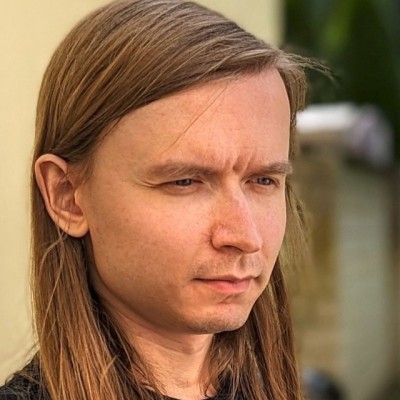
Max Novikov
Heidelberg, Baden-Württemberg, Germany



Summary
👤
Senior🎓
Top SchoolMax Novikov is a results-driven Chief Technology Officer with 12 years of experience building reliable backend systems, cloud-native services, and performant data pipelines across startups and research institutions. Based in Heidelberg, he blends hands-on engineering with leadership, recently stepping into the CTO role at AICU after senior engineering and cloud roles that spanned Aiven, EMBL, and Yandex. A performance maniac and curious practitioner in machine learning and big data, he contributes to notable open-source projects—improving Python autocompletion in jedi and extending SQL parsing in difftastic—demonstrating a knack for robust tooling and parser work. He pairs backend rigor with user-focused improvements (e.g., UI refinements in ilastik’s carving workflow), and is comfortable turning complex domain needs into pragmatic, test-driven solutions. Not obvious from titles: he has a track record of optimizing real-time systems and integrating CI for high-stakes, deadline-driven projects like Yandex’s live forecasting services.
 13 years of coding experience
 11 years of employment as a software developer
 Specialist, Applied Informatics In Economics, Specialist, Applied Informatics In Economics at Nizhny Tagil State Socio-Pedagogical Academy (NTGSPA)
 Russian, English, German
Stackoverflow
13reputation
113reached
0answers
2questions

Github Skills (22)
static-analysis10
qt10
python10
autocomplete10
user-interface10
ui-design10
interface-design10
grammar10
grammars10
lexical-analysis10
parsing10
front-end-development10
sql10
text-parsing10
il9
Programming languages (18)
Github contributions (5)
ilastik/ilastik
Nov 2018 - Sep 2021
ilastik-shell, applets, and workflows to string them together.
Role in this project: Back-end Developer & UI Designer
Back-end Developer & UI DesignerContributions:33 reviews, 296 commits, 90 PRs in 2 years 11 months
Contributions summary:Max's commits primarily involve modifications within the carving workflow, focusing on improving user interface elements and object naming conventions. Contributions include generating default names for objects in carving, storing carving object prefixes within the project, making the object prefix configurable, and implementing f-strings. Furthermore, the user refactored the order of fields and added functionality for showing object names, indicating a focus on user experience and usability improvements.
appletshelltostringilastikmachine-learning
Wilfred/difftastic
May 2021 - Jun 2022
a structural diff that understands syntax 🟥🟩
Role in this project:Back-end Developer
Back-end DeveloperContributions:166 commits in 1 year 1 month
Contributions summary:Max contributed to the development of a SQL parser, primarily by adding support for various SQL features, including expressions, associations, parenthesized expressions, field accessors, and table constraints. They focused on expanding the grammar of the parser to correctly handle features like function calls, built-in data types, and operators, ensuring accurate interpretation of SQL syntax. The user's contributions enhanced the parser's ability to handle complex SQL queries.
tree-sitterlanguagetoolstructural-diffstructuraldiff
Find and Hire Top DevelopersWe’ve analyzed the programming source code of over 60 million software developers on GitHub and scored them by 50,000 skills. Sign-up on Prog,AI to search for software developers.