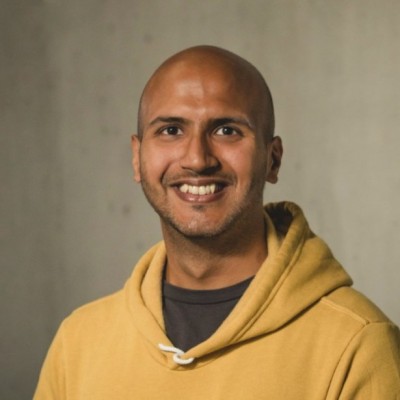
Mayank Mittal
Research Scientist at NVIDIA
Zurich, Zurich, Switzerland



Summary
🤩
Rockstar🎓
Top SchoolMayank Mittal is a research scientist and robotics engineer with 11 years of experience, currently at NVIDIA and pursuing doctoral research at ETH Zurich in learning-based navigation and manipulation for unstructured environments. He combines academic rigor from ETH and IIT Kanpur with hands-on systems work across labs and industry, including research stints at University of Toronto and NNAISENSE. His contributions to open-source robotics—such as backend development on NVIDIA Isaac Sim’s IsaacLab and refactoring across the OCS2 optimal control framework—reflect a focus on core functionality, maintainability, and simulation tooling. Comfortable working across simulation, control, and applied learning, he also brings practical project leadership from leading an AUV team at IITK. Notably, his work often blends documentation and build-process improvements with feature development, revealing attention to reproducibility and developer experience.
 10 years of coding experience
 5 years of employment as a software developer
 Indian Institute of Technology KanpurDoctor of Philosophy - PhD, Doctor of Philosophy - PhD at ETH ZürichMaster's degree, Master's degree at ETH Zurich
 German, Hindi, English
Github Skills (14)
control-theory10
controls10
robotics10
refactoring10
c-language10
cprogramming-language10
python10
controlling10
control-flow10
controlled10
documentation10
refactor10
build-system8
urdf8
Programming languages (8)
Github contributions (5)
isaac-sim/IsaacLab
Jan 2023 - Mar 2023
Unified framework for robot learning built on NVIDIA Isaac Sim
Role in this project: Back-end Developer
Back-end DeveloperContributions:9 releases, 690 reviews, 39 commits in 2 months
Contributions summary:Mayank primarily contributed to the `omni.isaac.orbit` extension, adding and modifying Python files. The changes involved implementing features within the actuator group, roadmap updates, and fixing import statements in `setup.py` files. These contributions indicate a focus on core functionality and maintenance within the robotics simulation framework. The user also made updates in the documentation of the library.
roboticsnvidiagpusimreinforcement-learning
leggedrobotics/ocs2
Jul 2021 - Sep 2022
Optimal Control for Switched Systems
Role in this project:Software Engineer
Software EngineerContributions:154 commits, 1 tag, 2 comments in 1 year 1 month
Contributions summary:Mayank's commits primarily involved refactoring and renaming robotic examples within the OCS2 framework. They modified documentation files and code to align with the renaming, demonstrating a focus on code organization and maintainability. Additionally, the user contributed to installation instructions by adding information on cloning submodules, which shows their understanding of project dependencies and build processes. Their work touched multiple robotic examples, indicating a broad understanding of the project's scope and codebase.
roboticsmpcswitched-systemsoptimal-controlyarp
Find and Hire Top DevelopersWe’ve analyzed the programming source code of over 60 million software developers on GitHub and scored them by 50,000 skills. Sign-up on Prog,AI to search for software developers.