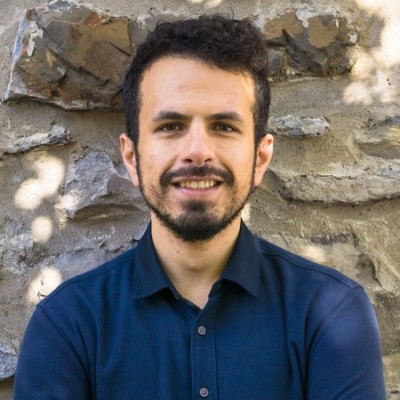
Mehdi Mirza
Research Scientist at Université de Montréal
London, England, United Kingdom



Summary
🤩
Rockstar🎓
Top SchoolMehdi Mirza is a research scientist with 14 years of experience in machine learning and deep learning, currently working at DeepMind and completing a PhD in Computer Science at Université de Montréal. His background spans physics (BSc) and AI (MSc), and he has a track record of impactful internships and research placements at Google DeepMind, MIT, and Idiap. Mehdi is an active open-source contributor to foundational ML tooling—making targeted, low-level fixes and algorithmic implementations in projects like Theano (now PyTensor), pylearn2, Blocks, and DeepLearningTutorials—demonstrating attention to numerical stability, optimizer design (Adam), and reproducible experiments. He combines rigorous academic research with practical engineering, notably improving gradient and stability issues in core libraries and adding optimizers and tests that benefit the wider community. Based in London, he brings deep technical fluency in probabilistic models and neural network training to applied research problems in vision and representation learning.
 14 years of coding experience
 1 year of employment as a software developer
 MSc, Artificial Intelligence, MSc, Artificial Intelligence at Universitat de BarcelonaDoctor of Philosophy (Ph.D.), Computer Science, Doctor of Philosophy (Ph.D.), Computer Science at Université de Montréal / University of MontrealBSc, Physics, BSc, Physics at Sharif University of Technology
 English, Persian
Github Skills (28)
algorithm10
unit-testing10
computation10
numerical10
python10
optimizers10
optim10
machine-learning10
optimizer10
autoencoder10
numerics10
deep-learning10
optimisation10
adam10
neural-network10
Programming languages (2)
Github contributions (5)
lisa-lab/pylearn2
Feb 2012 - Jun 2015
Warning: This project does not have any current developer. See bellow.
Role in this project: ML Engineer
ML EngineerContributions:252 commits, 15 PRs, 9 pushes in 3 years 3 months
Contributions summary:Mehdi appears to be focused on implementing and debugging various autoencoder models within the pylearn2 machine learning library. Their contributions include adding a higher-order contractive autoencoder (H-CAE) implementation, fixing bugs in the H-CAE's penalty calculation, and adding unit tests. The user also made improvements to the existing contractive autoencoder and made changes related to dataset handling for MNIST, as well as adding a stochastic max pooling implementation.
javascripttypescript
Theano/Theano
Feb 2013 - Feb 2016
Theano was a Python library that allows you to define, optimize, and evaluate mathematical expressions involving multi-dimensional arrays efficiently. It is being continued as PyTensor: www.github.com/pymc-devs/pytensor
Role in this project:Back-end Developer
Back-end DeveloperContributions:9 commits, 3 PRs, 2 pushes in 3 years
Contributions summary:Mehdi primarily focused on bug fixes and improvements to the `theano/sandbox/multinomial.py` file, addressing issues related to gradient calculations and numerical stability. They modified the code to return `DisconnectedType` or `zeros_like` in the multinomial gradient calculations to resolve type errors. Additionally, the user added a `Collections.Counter` implementation for Python versions less than 2.7, enhancing backward compatibility. These commits indicate a focus on improving the core functionality and compatibility of the Theano library.
python-librarymathmulti-dimensionalpythonevaluate
Find and Hire Top DevelopersWe’ve analyzed the programming source code of over 60 million software developers on GitHub and scored them by 50,000 skills. Sign-up on Prog,AI to search for software developers.