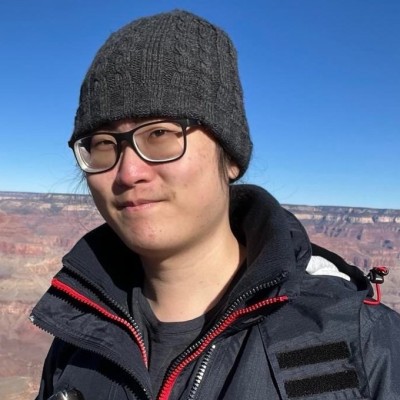
Michael Ko
Research Data Analyst 1
San Jose, California, United States



Summary
👤
Senior🎓
Top SchoolMichael Ko is a research data analyst and Stanford M.S. statistics graduate with 12 years of experience applying machine learning, computer vision, and deep learning to medical imaging, biomechanics, and robotics. At Stanford he contributes to high-impact healthcare ML projects—co-developing large public datasets and near-radiologist CNN models—and currently supports Prof. Akshay Chaudhari’s lab on vision-based medical and biomechanical research. His engineering background includes embedded model compression and robust audio keyword detection for autonomous robots, plus course assistant roles for Stanford’s flagship ML course. Michael is also an active contributor to HELM, improving misspelling perturbation tooling that enhances transparency and robustness in large language model evaluations. He combines rigorous statistical training with hands-on ML engineering to move research code toward reliable, real-world systems. Based in San Jose, he specializes in bridging academic research and production-ready machine learning solutions.
 12 years of coding experience
 3 years of employment as a software developer
 Master of Science (M.S.) Statistics, Master of Science (M.S.) Statistics at Stanford University
 Chinese, English
Github Skills (7)
nltk10
machine-learning10
nlp10
data-augmentation10
python10
natural-language-processing10
ml10
Programming languages (5)
Github contributions (5)
stanford-crfm/helm
Mar 2022 - Apr 2022
Holistic Evaluation of Language Models (HELM) is an open source Python framework created by the Center for Research on Foundation Models (CRFM) at Stanford for holistic, reproducible and transparent evaluation of foundation models, including large language models (LLMs) and multimodal models.
Role in this project: ML Engineer
ML EngineerContributions:17 commits in 24 days
Contributions summary:Michael primarily focused on improving the `MisspellingPerturbation` augmentation within the HELM framework. Their contributions included refactoring the misspelling implementation, updating it to handle periods and newlines, and modifying the `run_expander.py` file to modify the parameters for the misspelling sweep. They also fixed bugs, refined code formatting, and addressed inconsistencies in the code. Their work directly impacts the quality and functionality of the language model evaluation.
foundation-modelshelmlanguage-modellarge-language-modelsmultimodal
p-lambda/in-n-out
Oct 2020 - Oct 2021
Code for the ICLR 2021 Paper "In-N-Out: Pre-Training and Self-Training using Auxiliary Information for Out-of-Distribution Robustness"
Contributions:28 commits, 3 pushes in 1 year
out-of-distributionrobustnesspre-trainingself-training
Find and Hire Top DevelopersWe’ve analyzed the programming source code of over 60 million software developers on GitHub and scored them by 50,000 skills. Sign-up on Prog,AI to search for software developers.