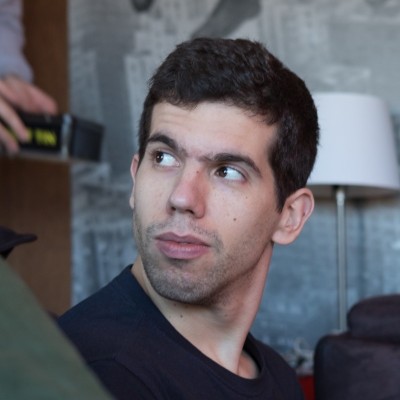
Miguel Palhas
Software Developer at Subvisual
Braga, Portugal



Summary
👤
Senior🎓
Top SchoolMiguel Palhas is a seasoned software developer with 14 years of experience, currently building backend and blockchain systems at Subvisual and formerly leading blockchain engineering at Lightshift Capital. He blends high-performance systems work in Elixir and Rust with practical Solidity smart-contract optimization, contributing to notable open-source projects like foundry (Ethereum toolkit in Rust) and Seaport (NFT marketplace). His background spans FinTech infrastructure, AWS/Terraform-driven deployments, and in-house crypto payment systems, reflecting a strong end-to-end grasp of payment rails and secure wallet design. A former researcher in high-performance computing, he brings a performance-first mindset to protocol and backend design, often refactoring to reduce costs and latency. Public-speaking and mentoring experience complement his hands-on work, and he’s an above-average chess player—hinting at a strategic, analytical approach to engineering problems. Based in Braga, Portugal, he frequently advises fintechs and contributes to open-source tooling that underpins Ethereum development.
 14 years of coding experience
 9 years of employment as a software developer
 Ethereum Certified Developer Ethereum & Blockchain development, Ethereum Certified Developer Ethereum & Blockchain development at B9lab AcademyMSc Degree Informatics Engineering, MSc Degree Informatics Engineering at Universidade do Minho
 Portuguese, English
Stackoverflow
970reputation
140kreached
18answers
6questions

Github Skills (27)
programming-language10
solidity10
testing10
gas-optimization10
compiler-compiler10
ethereum10
blockchain10
compiler10
smart-contracts10
rust10
project-management9
application-framework9
tooling9
evm9
app-framework9
Programming languages (28)
Github contributions (5)
ProjectOpenSea/seaport
Jun 2022 - Jun 2022
Seaport is a marketplace protocol for safely and efficiently buying and selling NFTs.
Role in this project: Back-end Developer
Back-end DeveloperContributions:6 reviews, 13 commits, 6 PRs in 10 days
Contributions summary:Miguel focused on optimizing the Seaport marketplace protocol, specifically improving the efficiency of amount derivation within the `AmountDeriver` library. Their work involved refactoring calculations, delaying computations to reduce gas costs, and conducting code reviews. These changes directly impact how the protocol handles item amounts and time-based calculations within orders, demonstrating a strong focus on performance optimization within the smart contract code. The user also updated tests to reflect the changes made in the library.
marketplaceseaportdappethereumblockchain
foundry-rs/foundry
May 2022 - May 2022
Foundry is a blazing fast, portable and modular toolkit for Ethereum application development written in Rust.
Role in this project:Backend Developer
Backend DeveloperContributions:29 reviews, 1 commit, 8 PRs in 1 day
Contributions summary:Miguel primarily contributed to the `foundry-rs/foundry` repository by implementing new features and fixing bugs related to the Ethereum development toolkit. They added functionality such as listing tests, enhancing error messages, and providing support for Otterscan's custom RPC endpoints. Their work involved modifying core files related to testing, selectors, and Otterscan integration, demonstrating a focus on improving the tool's capabilities and usability.
ethereumrustsolidityevmtesting
Find and Hire Top DevelopersWe’ve analyzed the programming source code of over 60 million software developers on GitHub and scored them by 50,000 skills. Sign-up on Prog,AI to search for software developers.