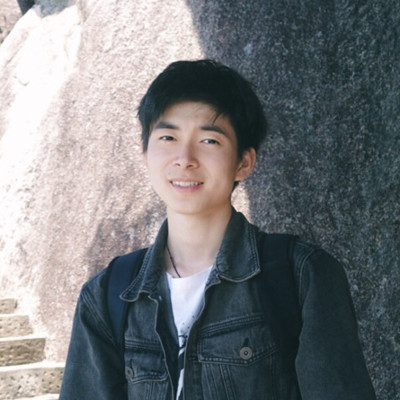
Mingrui Zhang
Member Of Technical Staff at Genesis AI
London, England, United Kingdom



Summary
🤩
Rockstar🎓
Top SchoolMingrui Zhang is a researcher and machine learning engineer with eight years of experience applying physics-informed ML to differentiable simulation, 3D generative models, and high-performance computing. Based in London, he has contributed to industry and research teams at Taichi Graphics, Tencent, Man AHL, and currently Genesis AI and Citadel, bridging academic PhD work at Imperial College with production-grade optimization. Notable open-source contributions include modernizing the DiffTaichi differentiable simulators and integrating Taichi-accelerated ray marching and volume rendering into a popular Stable DreamFusion NeRF pipeline, demonstrating expertise in compiler-aware performance tuning for ML workloads. His background spans embodied AI, AD/compiler work, geometry processing and quantitative ML, enabling him to move ideas from simulation and theory into optimized implementations. Colleagues know him for updating complex example suites to new library versions and fixing subtle bugs that preserve core functionality—work that often goes unnoticed but keeps research software usable.
 8 years of coding experience
 3 years of employment as a software developer
 Doctor of Philosophy - PhD, Physics based machine learning, Doctor of Philosophy - PhD, Physics based machine learning at Imperial College LondonBachelor's degree, Industrial Design, Bachelor's degree, Industrial Design at Zhejiang University
 Chinese, English, Japanese
Github Skills (12)
volume-rendering10
machine-learning10
differentiable-programming10
serf10
python10
graphic8
gpu8
simulation7
simulations7
stable-diffusion7
robotics5
windows-gui4
Programming languages (7)
Github contributions (5)
taichi-dev/difftaichi
Oct 2021 - Jan 2023
10 differentiable physical simulators built with Taichi differentiable programming (DiffTaichi, ICLR 2020)
Role in this project: ML Engineer
ML EngineerContributions:7 commits, 14 PRs, 12 pushes in 1 year 3 months
Contributions summary:Mingrui primarily focused on upgrading and adapting various example scripts within the `difftaichi` repository to the latest Taichi version (v0.8.1), which involves significant code changes. The user's contributions include updating numerous example files, indicating a focus on maintaining compatibility with the core differentiable programming library. This upgrade touches several aspects of the examples, including those related to differentiable MPM (Material Point Method) simulations, demonstrating a strong involvement with the core functionality of the library. The user also fixed bugs to improve functionality.
differentiable-programmingtaichisimulationroboticsgraphics
ashawkey/stable-dreamfusion
Feb 2023 - Mar 2023
Text-to-3D & Image-to-3D & Mesh Exportation with NeRF + Diffusion.
Role in this project:ML Engineer
ML EngineerContributions:1 review, 3 PRs, 6 comments in 27 days
Contributions summary:Mingrui's commits primarily focus on integrating Taichi, a high-performance parallel computing language, into the existing NeRF (Neural Radiance Fields) framework. This includes implementing Taichi-based ray marching, volume rendering, and a hash encoder for efficient feature extraction. They also contribute to the integration of Taichi for packing bitfields. The changes aim to accelerate the core components of the NeRF pipeline, showcasing optimization efforts for 3D reconstruction.
pytorchdeep-learningguinerfdiffusion
Find and Hire Top DevelopersWe’ve analyzed the programming source code of over 60 million software developers on GitHub and scored them by 50,000 skills. Sign-up on Prog,AI to search for software developers.