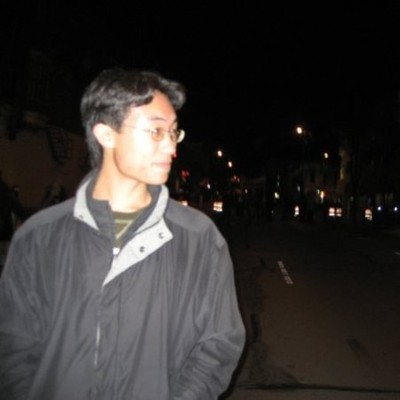
Phil Wang
San Francisco, California, United States



Summary
🤩
Rockstar🎓
Top SchoolPhil Wang is an experienced software and AI engineer in San Francisco with 11 years building production systems and research-grade deep learning models. Trained in Electrical & Computer Engineering (Summa Cum Laude) and Biomedical M.Eng at Cornell and an MD graduate of the University of Michigan Medical School, he blends rigorous engineering with domain knowledge in biomedical applications. At Checkr and Uber he shipped real-time services, internal ML platforms, and data plumbing; more recently his open-source work powers state-of-the-art attention models and generative systems across many lucidrains and EleutherAI projects. He has hands-on expertise implementing transformers, diffusion models, vector quantization, and optimizers (notably contributing Lion kernels and RETRO/ViT/StyleGAN2 implementations). Equally comfortable in backend services and ML research code, he’s driven both product-facing dashboards and low-level CUDA/PyTorch optimizations. Phil describes his aim as finding “utopia in a tensor” — a succinct hint at his focus on attention-first models and practical, shareable research engineering.
 11 years of coding experience
 4 years of employment as a software developer
 MD, Medicine, MD, Medicine at University of Michigan Medical SchoolM.Eng, Biomedical Engineering, M.Eng, Biomedical Engineering at Cornell University
 English, Chinese
Github Skills (90)
transformers10
language-model10
python10
optimizers10
attention-mechanism10
datatable10
machine-vision10
mlops10
deep-learning10
image-generation10
trainings10
vision-transformer10
tabular10
quantization10
faster-rcnn10
Programming languages (10)
Github contributions (5)
lucidrains/DALLE-pytorch
Jan 2021 - Jul 2022
Implementation / replication of DALL-E, OpenAI's Text to Image Transformer, in Pytorch
Role in this project: ML Engineer
ML EngineerContributions:177 releases, 5 reviews, 397 commits in 1 year 6 months
Contributions summary:Phil's commits primarily focused on implementing and refining core components of a DALL-E-like text-to-image generation model in PyTorch. They built foundational elements such as a VAE and CLIP model and integrated them with a transformer-based decoder to generate images from text. The user contributed to crucial features, including the ability to generate images, integrate various attention mechanisms, and utilize techniques like classifier-free guidance.
pytorchmulti-modaltransformersdall-eattention-mechanism
lucidrains/lion-pytorch
Feb 2023 - Mar 2023
🦁 Lion, new optimizer discovered by Google Brain using genetic algorithms that is purportedly better than Adam(w), in Pytorch
Role in this project:ML Engineer
ML EngineerContributions:15 releases, 29 commits, 9 PRs in 26 days
Contributions summary:Phil primarily contributed to the development and optimization of the Lion optimizer, a novel approach to gradient descent. Their work included implementing the core Lion algorithm in PyTorch, refining the code, and integrating a high-performance Triton implementation for faster computation. They also focused on improving performance by utilizing inplace operations and addressing compatibility issues. This indicates a focus on the practical implementation and efficiency of the optimizer within the PyTorch ecosystem.
artificial-intelligencedeep-learningevolutionary-searchoptimizers
Find and Hire Top DevelopersWe’ve analyzed the programming source code of over 60 million software developers on GitHub and scored them by 50,000 skills. Sign-up on Prog,AI to search for software developers.