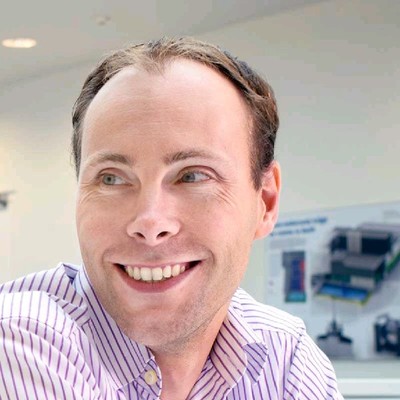
Pieter Eendebak
Quantum Engineer at TNO
Netherlands



Summary
🤩
Rockstar🎓
Top SchoolPieter Eendebak is a Quantum Engineer with 16 years of experience bridging mathematical theory, scientific software and experimental quantum hardware. With a PhD in mathematics and a long tenure at QuTech building full-stack few-qubit demonstrators, he specializes in structured calibration and tuning of spin qubits and tooling that connects theory to lab control. He combines deep performance-focused backend work on core Python scientific projects (NumPy, CPython, Matplotlib) with practical QA and test automation for Jupyter/IPython ecosystems. Pieter’s open-source contributions reveal a knack for low-level optimization and numerical robustness—improving bytearray/list operations in CPython and micro-optimizing plotting and linear-algebra paths in widely used libraries. Comfortable across research, engineering and tooling, he also has earlier experience in computer vision and combinatorial design enumeration, a provenance that informs his systematic approach to measurement and calibration. Now based in the Netherlands at TNO, he continues to apply mathematical rigor to scalable, reliable quantum control software.
 16 years of coding experience
 18 years of employment as a software developer
 Ph.D. Mathematics, Ph.D. Mathematics at Utrecht University
Github Skills (52)
algorithm10
data-visualizations10
algorithms10
quantum-mechanics10
computer-algebra10
pytest10
python10
jupyter10
matplotlib10
scikit10
testing10
mathematics10
spyder10
data-visualisation10
ipython10
Programming languages (12)
Github contributions (5)
spyder-ide/spyder
Sep 2015 - Mar 2024
Official repository for Spyder - The Scientific Python Development Environment
Role in this project: Software Developer
Software DeveloperContributions:7 PRs, 18 comments, 12 issues in 8 years 8 months
Contributions summary:Pieter primarily focused on bug fixes and minor enhancements within the Spyder IDE codebase. Their contributions included correcting a bug in the encoding utility, renaming a variable, and removing an unnecessary clause. They also implemented a new feature that allows setting the window title from the command line, which required modifications to both the application and the command-line interface options. Finally, they made a minor style fix.
pythonpyqt5anaconda-distributionanacondapyqt
microsoft/Qcodes
Feb 2016 - Jan 2023
Modular data acquisition framework
Role in this project:Backend Developer
Backend DeveloperContributions:6 reviews, 105 commits, 6 PRs in 6 years 11 months
Contributions summary:Pieter primarily contributed to the `qcodes` repository, which is a modular data acquisition framework. Their work includes adding functionality to setup files, fixing warnings in plotting modules, removing and adding functionality to progress and loops. They have demonstrated skills in modifying the codebase and implementing features related to measurement loops and data acquisition.
physicsdata-acquisitionstream-processingdata-processingframework
Find and Hire Top DevelopersWe’ve analyzed the programming source code of over 60 million software developers on GitHub and scored them by 50,000 skills. Sign-up on Prog,AI to search for software developers.