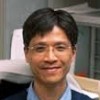
Ping-chang Lin
Senior Imaging Scientist at Roche
Greater Chicago Area United States



Summary
👤
Senior🎓
Top SchoolPing-chang Lin is a Senior Imaging Scientist with a decade of experience applying machine learning, deep learning and advanced MR/NMR methods to medical imaging, pathology and textbook content analysis. He has led teams and projects from academia to industry, deploying CNN-driven solutions such as Mask R-CNN for microvessel detection and attention-based multiple-instance learning for whole-slide breast cancer grading. His work spans multi-modal imaging (MRI, X-ray, IR to X-ray optics, FT-IR), imaging physics, and practical pipeline engineering for registration, segmentation and 3D pose estimation on HPC. Notably, he has translated imaging physics insights into software improvements—shortening DTI acquisitions and eliminating artifacts by modifying MRI pulse sequence code—and coached others on performance optimization for deep learning. With a PhD in Biophysics and a track record across NIH, university labs and industry, he blends rigorous experimental design with production-focused ML engineering.
 10 years of coding experience
 11 years of employment as a software developer
 Ph.D. Biophysics, Ph.D. Biophysics at University of California, DavisPh.D. study Photonics and Optoelectronics, Ph.D. study Photonics and Optoelectronics at National Taiwan UniversityM.S. Electrophysics, M.S. Electrophysics at National Chiao Tung UniversityB.S. Physics, B.S. Physics at National Tsing Hua University
Github contributions (5)

rcc-uchicago/neural_network_performance_guide_2
Dec 2019 - May 2020
Contributions:17 commits, 16 pushes, 1 branch in 5 months
rcc-uchicago/Introduction-to-translating-between-Python-and-R
Nov 2020 - Mar 2021
Contributions:14 commits, 2 pushes in 4 months
Find and Hire Top DevelopersWe’ve analyzed the programming source code of over 60 million software developers on GitHub and scored them by 50,000 skills. Sign-up on Prog,AI to search for software developers.